

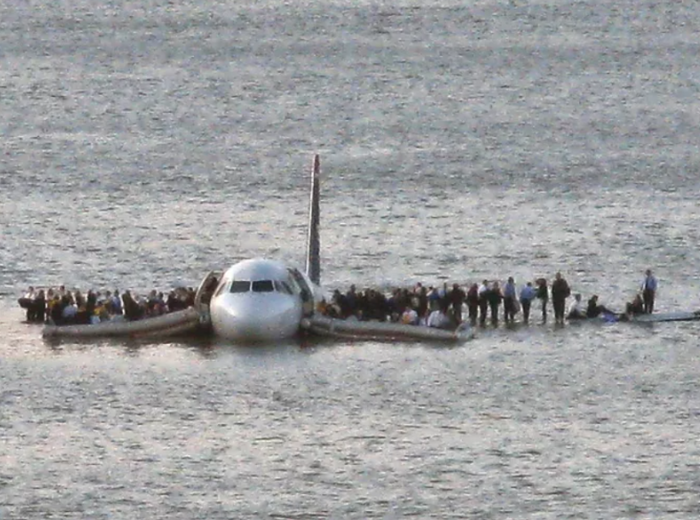
Credit : Steven Day/AP/Shutterstock
When US Airways Flight 1549 lost both engines shortly after takeoff on January 15, 2009, millions of people around the world held their breath. The aircraft had struck a flock of Canada geese and was left helpless above New York City. Instead of crashing into skyscrapers or descending into chaos, Captain Chesley “Sully” Sullenberger and First Officer Jeffrey Skiles guided the jet down onto the Hudson River, where everyone survived. The scene was dramatic, and the event was quickly dubbed the “Miracle on the Hudson.”
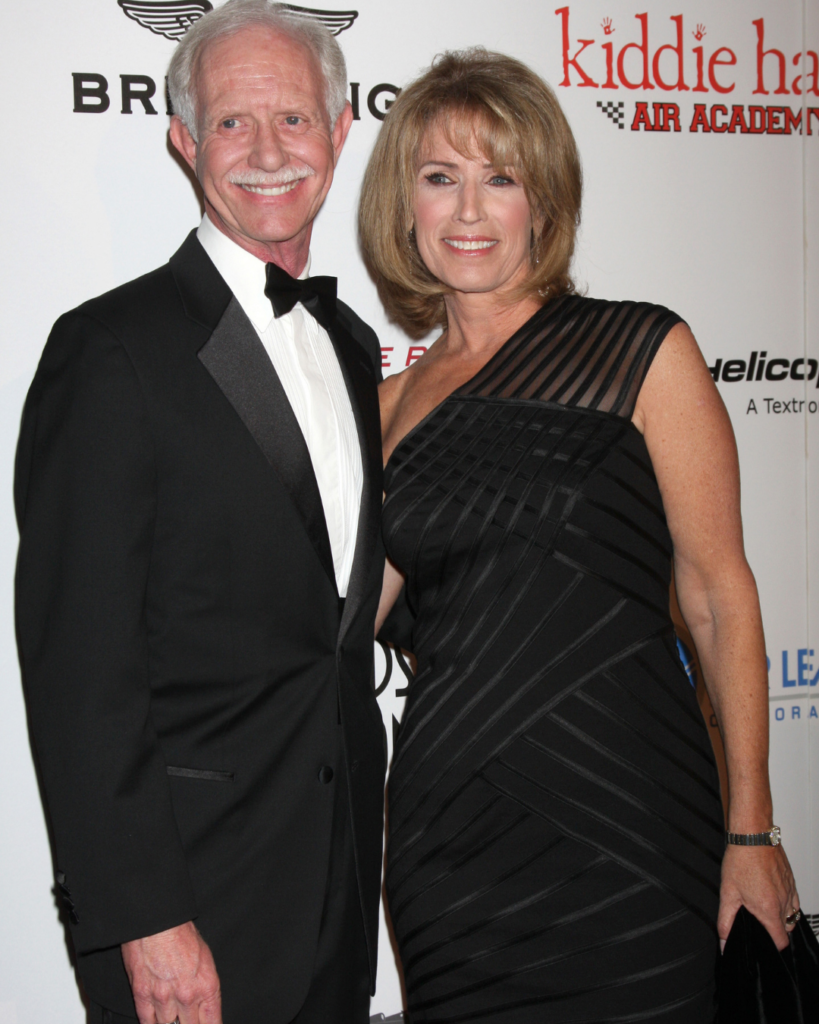
Credit: Kathy Hutchins/shutterstock
Key Takeaways
- Captain Chesley “Sully” Sullenberger’s water landing on the Hudson River in 2009 saved all 155 people aboard, an event widely seen as heroic and often called the “Miracle on the Hudson.”
- Aviation expert Patrick Smith explains that the success of that emergency landing was not magic or myth but a result of professional training, skill, luck, and calm decision-making under pressure.
- “Hero” might be too strong a word for some, because the pilots did what they were trained to do, and many similar situations have had different, less fortunate outcomes.
- Smith also reminds us that there are many lesser-known pilots whose skilled actions prevented worse disasters but who never became household names.
Many remember Sully’s calm voice, his steady hands, and the relief of watching passengers walk onto inflatable rafts on the river. In the public mind, he became a symbol of sheer heroism, someone whose nerves of steel and extraordinary skill saved lives in an impossible situation.
But aviation expert Patrick Smith, author of the blog Ask the Pilot, takes a more grounded view. In a detailed Q&A piece, he explains that what happened that day was less about spectacle and more about professional competence under pressure. He notes that while ordinary people often think a water landing is astonishing, it actually involves many of the same flying skills used thousands of times in everyday practice.
Smith points out that the mechanics of a water landing, keeping the wings level, managing glide speed, and executing a smooth flare, are not fundamentally different from a typical landing on a runway. The big difference that day was the emergency context, with both engines out and a city beneath the plane.
He also emphasizes something less glamorous: luck. The weather was clear, the plane was within gliding distance of the river, and it was daytime. Had the same engine failure occurred in darkness, fog, or over a part of the city where a water landing wasn’t possible, the outcome could have been very different. In aviation, as in life, skill matters, but luck shapes what options are available.
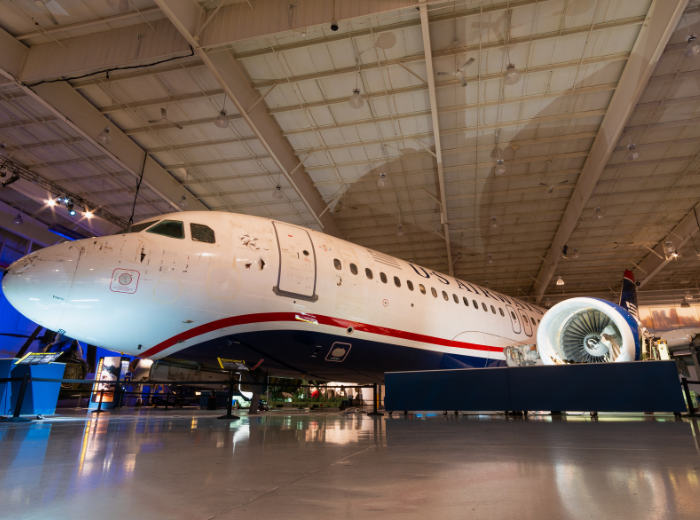
Credit: Sonder Quest/shutterstock
For Smith, celebrating Sully’s professionalism, and the teamwork between Sully, Skiles, and the cabin crew, is important. The pilots did what they were trained to do, and they did it well. But calling it a miracle can blur the reality that many other pilots have faced terrifying situations and used similar training to save lives, even when the odds were worse and the outcomes less perfect.
There’s also a broader conversation about what we mean by the word “hero.” Some define a hero as someone who sacrifices personally to save others, often at great personal risk. Smith suggests that while Sully and Skiles certainly acted calmly and skillfully, they didn’t willingly put themselves in harm’s way for others, they responded expertly to an emergency, exactly as they were expected to.
Still, the world loves stories of courage. Sully’s tale has inspired countless people, led to films, and made his name synonymous with cool-headed leadership in a crisis. And whether you call it heroism, professionalism, or just exceptionally good flying paired with favorable conditions, there’s no denying that Flight 1549’s outcome was extraordinary. If you enjoy thoughtful takes on real-world stories that mix calm expertise, human resilience, and unexpected outcomes, you’ll find more like this at Simply Wholesome. We bring you well-grounded, heartening narratives that go beyond the headlines and explore what moments like these mean, not just for the people involved, but for all of us.








Leave a comment