

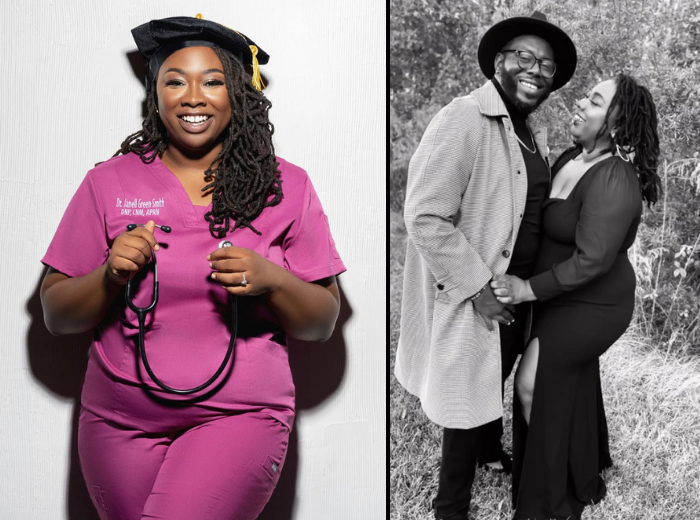
Credit: Janell Green Smith/ instagram
A woman whose life’s work was fighting for safer childbirth for Black women has herself become a tragic reminder of why that fight still matters.
Dr. Janell Green Smith, 31, a certified nurse-midwife, maternal health expert, and fierce advocate for Black maternal wellbeing, died on January 2, 2026 after complications from childbirth. She had just delivered her first child, a daughter named Eden, by cesarean section after developing preeclampsia, a dangerous pregnancy complication.
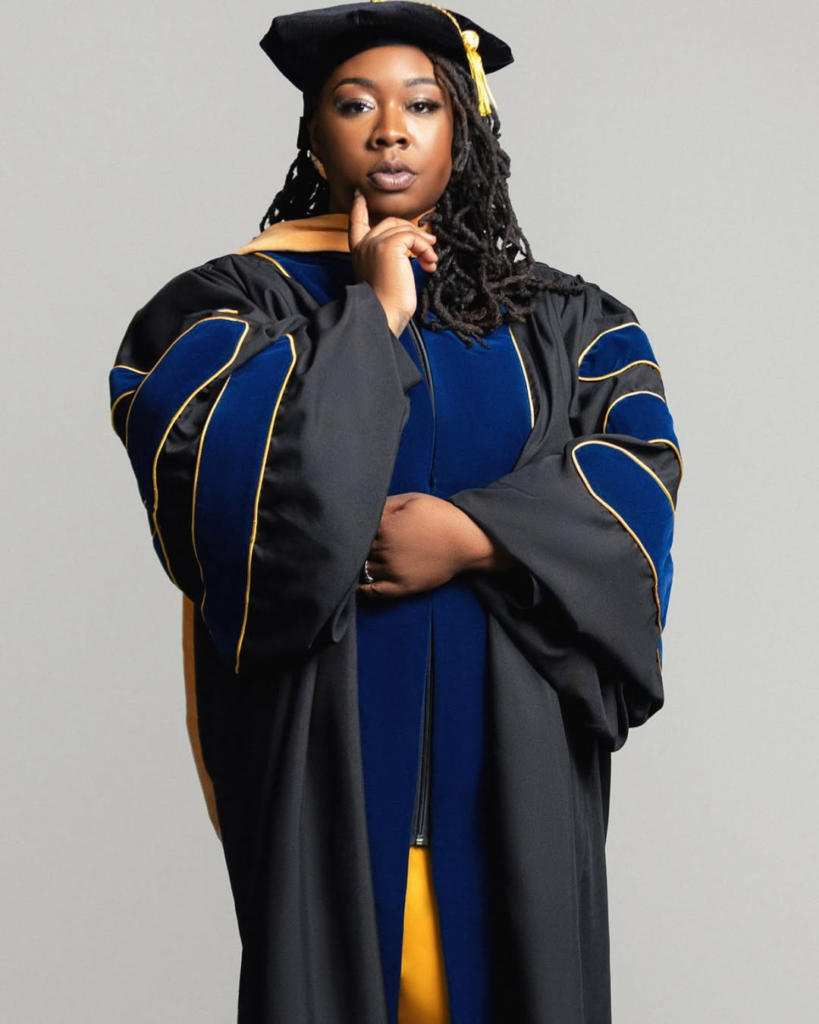
Credit: Janell Green Smith/ instagram
Key Takeaways
- Dr. Janell Green Smith, a respected Black midwife and maternal health advocate, died from childbirth complications days after delivering her first child, despite her expertise.
- Her death has drawn national attention and sparked intense conversation about racial disparities in maternal health care in the United States.
- Although she specialized in safe, equitable childbirth, systemic failures that disproportionately affect Black women contributed to the tragedy.

Credit: Janell Green Smith/ instagram
Friends and family had prepared for her arrival into motherhood with love and hope. According to reports and recollections shared on social media, Janell and her husband decorated a baby room and excitedly shared ultrasound photos as the due date approached, hopeful and ready to welcome their daughter.
But after she seemed initially to recover from the surgery, her incision site ruptured. She was rushed back into emergency surgery and did not survive.
Her family continues to mourn her loss. Her husband, Daiquan Smith, shared personal reflections online, calling the loss “unimaginable” and reminded supporters of her deep impact and legacy.
The news of Dr. Green Smith’s passing struck many as a devastating irony, a woman who knew better than most the complexities and risks of pregnancy could not protect herself from them.
She spent her career working to reduce maternal deaths, especially among Black women, a group that research shows is disproportionately affected by pregnancy-related complications in the U.S. Black women die from pregnancy-related causes at significantly higher rates than white women, a disparity that persists regardless of education, income, or access to care.
The National Black Nurses Association described her death as both “heartbreaking and unacceptable,” calling it a stark exposure of the systemic failures that continue to put Black birthing people at risk.
The American College of Nurse-Midwives (ACNM) echoed this sentiment in a statement shared on Facebook, calling her death a “profound failure of the systems meant to protect birthing people,” and pledging renewed action to dismantle racial inequities in maternal care.
In the days after the news spread, social media lit up with comments, stories, and questions, not just about Dr. Green Smith, but about the underlying issues her death represents.
On Reddit, one commenter said:
“A midwife and maternal health expert died from childbirth complications. If expertise couldn’t protect her, what protects anyone?”, highlighting anger and disbelief that someone so knowledgeable was still vulnerable.
Others explained the fear that many Black women feel when approaching pregnancy and childbirth in the U.S.
One commenter shared:
“As a woman of color this is one of the many reasons I refuse to have a baby in this country… after the way I’ve been treated by doctors, I don’t feel safe.”
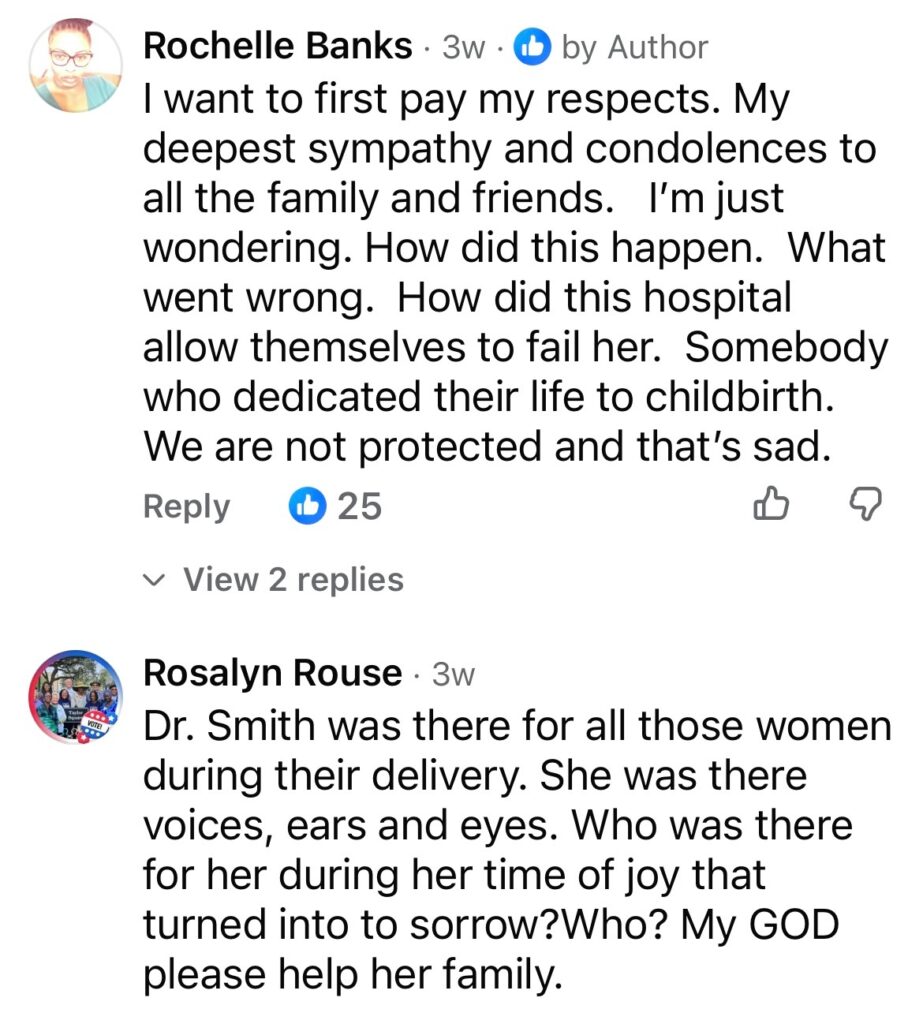
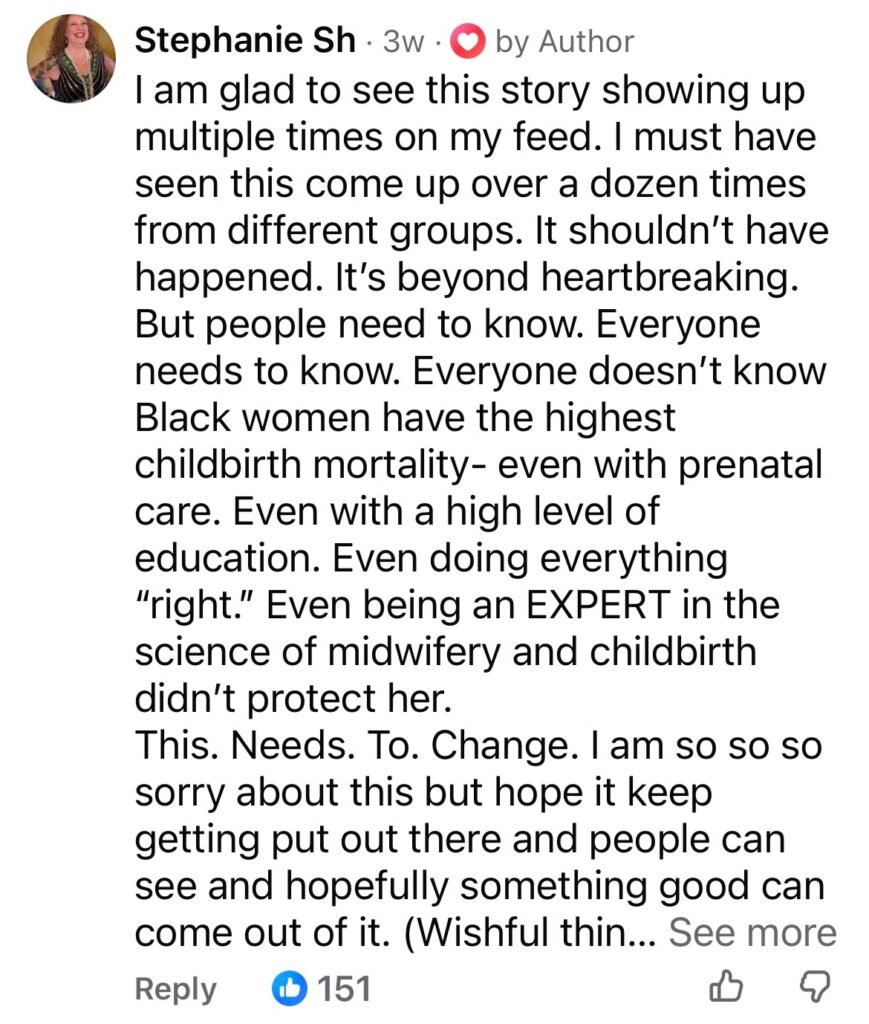
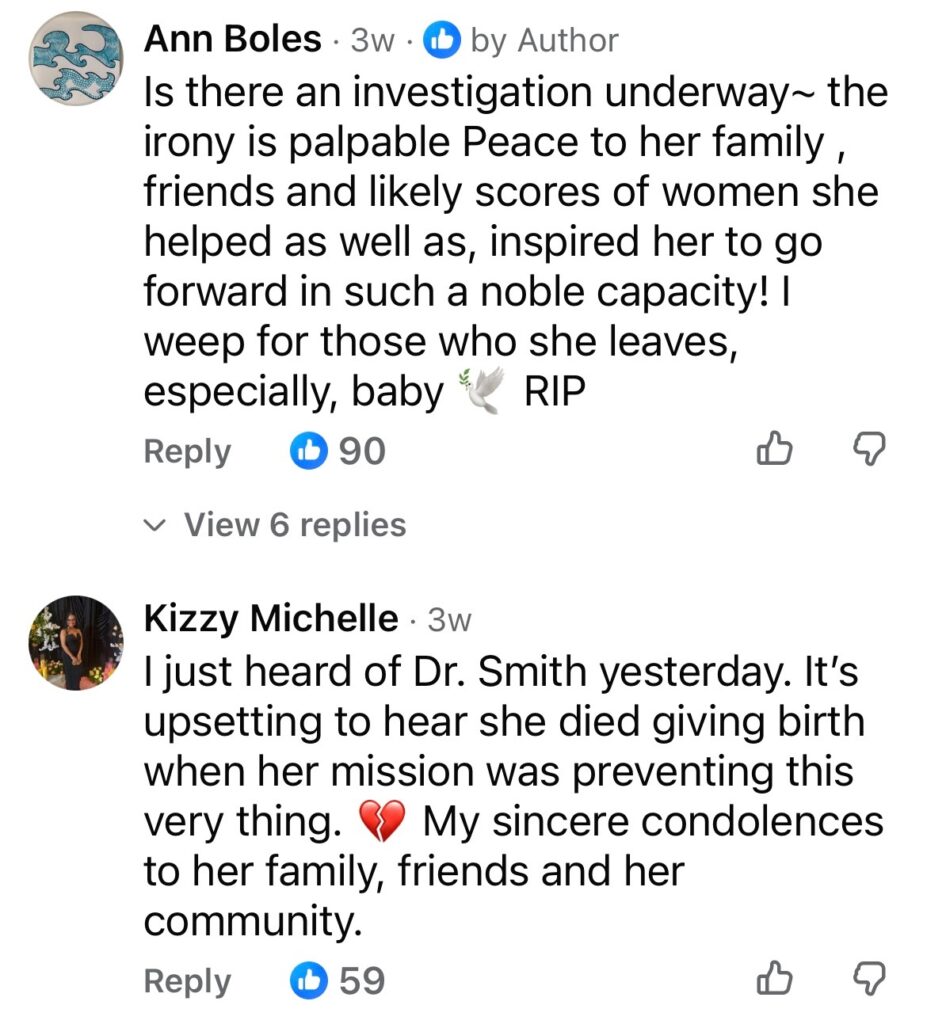
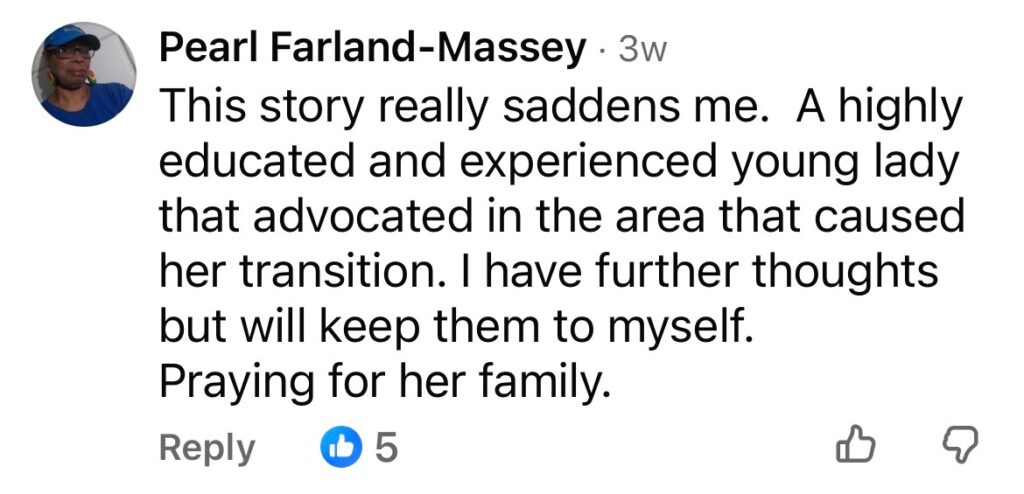
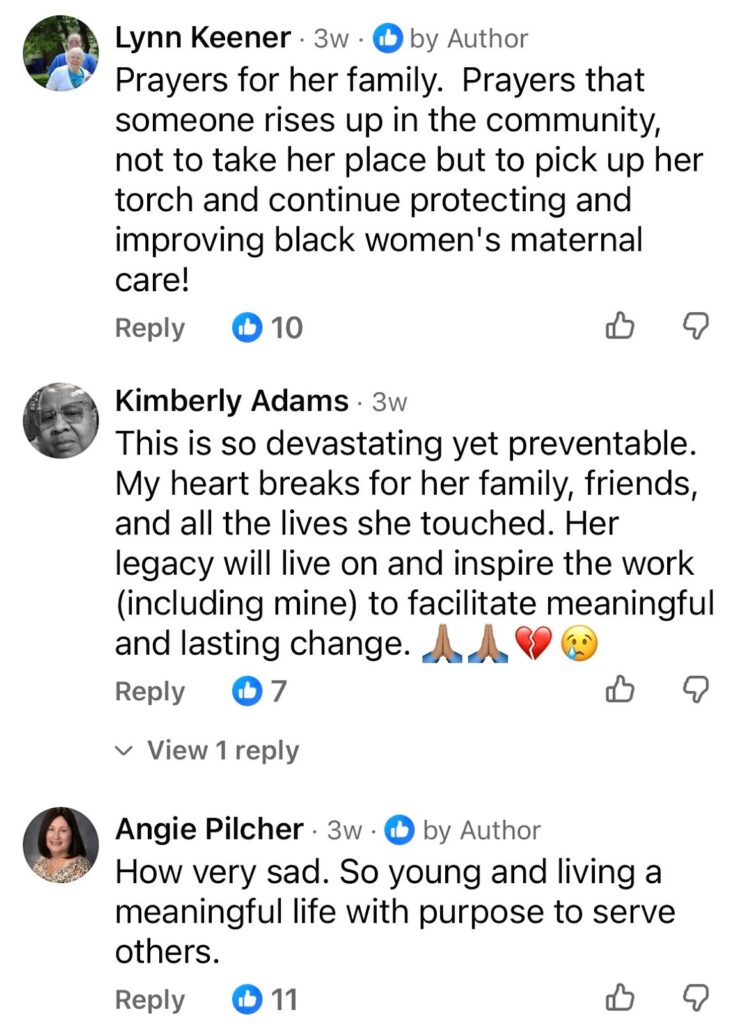
Some pointed to the medical details, discussing risks like preeclampsia and surgical complications, and expressing grief and empathy.
These reactions echo a familiar theme in online communities, that the struggle many Black women face in healthcare is not just anecdotal, but systemic, linking personal experience to broader patterns of bias and unequal treatment.
Dr. Green Smith’s death isn’t isolated. The United States has some of the highest maternal mortality rates among developed nations, and Black women are disproportionately affected. Even in cases where women are educated, insured, or medically experienced, outcomes can still be dangerously unjust.
Advocates and health organizations have long pointed out that systemic racism, implicit bias, and unequal quality of care contribute to these disparities, not only in childbirth but throughout life-saving medical treatment. The conversations inspired by this tragedy span TikTok, Facebook posts, Instagram tributes, and Reddit threads where users share personal fear, anger, and solidarity.
Across platforms like Instagram and Facebook, healthcare organizations, colleagues, and community groups posted tributes and calls for action, reaffirming commitments to Black maternal health advocacy and honoring Dr. Smith’s lifelong work.
Dr. Janell Green Smith will be remembered for her warmth, dedication, and fierce commitment to maternal health, especially for Black families who often feel invisible within healthcare systems. Colleagues described her as compassionate and tireless, a teacher and a healer who trained others and supported countless families.
Her death has become a rallying point for many who say the work she championed, equitable care, respectful treatment, and systemic change, remains urgent. Supporters have shared memories, prayers, and calls for policy reform in tribute to her life and legacy.
If stories about courage, real-world challenges, and the humanity behind headlines matter to you, you’ll find more thoughtful, empathetic narratives at Simply Wholesome. We highlight human experiences that spark awareness, connection, and reflection. Visit us to explore stories that deepen understanding and honor lives lived with purpose.












Leave a comment