

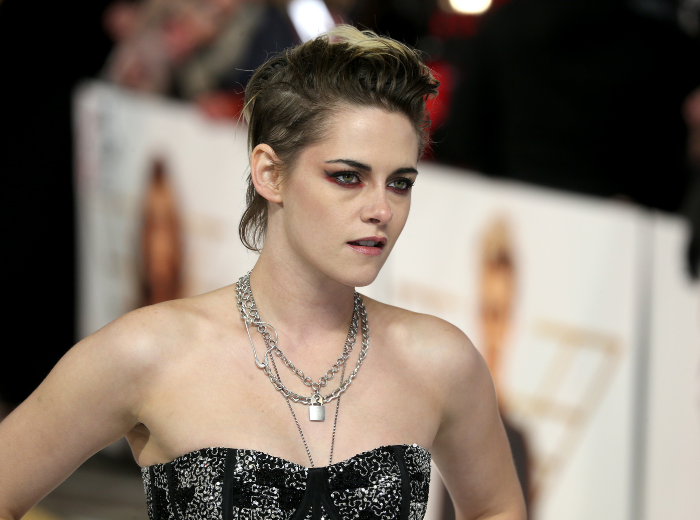
Credit: Shutterstock
Actress and filmmaker Kristen Stewart has given candid insight into a decision many stars talk about but few publicly consider: leaving the United States. In a recent interview with The Times of London, the Twilight alum said she is weighing what may be a major shift in her career, and possibly where she lives, because she feels she “can’t work freely” in the current American film environment.

Credit: Shutterstock
Key Takeaways
- Kristen Stewart said she may leave the U.S. because she feels she “can’t work freely” under the current political and film industry climate.
- She has already made her directorial debut The Chronology of Water in Latvia because it was “impossible” to make it in the U.S. as she envisioned.
- Stewart called proposed tariffs on foreign films “terrifying” for filmmakers, saying they could chill creative exchange and artistic freedom.
- Her comments ignited a wider online debate about artistic freedom, privilege, and the practical challenges of moving abroad vs. working within one’s home country.
Stewart, 35, is best known for her breakthrough work as an actress and most recently for making her directorial debut with The Chronology of Water, a film based on Lidia Yuknavitch’s memoir that premiered at the Cannes Film Festival in 2025. What many fans may not know is that she filmed that project in Latvia, not in the United States, not because she wanted to, but because she said it would have been “impossible” to make the movie in America under existing conditions.
When asked if she plans to stay in the U.S., Stewart answered, “Probably not. I can’t work freely there.”
But she also made it clear she’s not giving up on American audiences entirely. Instead, she wants to make films in Europe and then bring them back to the U.S. on her own terms.
Stewart’s comments were shaped by more than personal preference, they reflect broader concerns about political, economic, and creative conditions that she and others in Hollywood say are making filmmaking more difficult.
One major factor she cited is a proposed political policy championed by President Donald Trump, a 100% tariff on foreign-made films that, if enacted, would have far-reaching implications for international production and distribution. Stewart described the idea as “terrifying” for filmmakers who rely on global collaborations and overseas financing to bring projects to life.
In Stewart’s view, a tightening creative environment means more barriers to getting the kinds of stories she wants to tell off the ground, especially independent, character-driven work.
Her comments also come amid her broader reflections as a filmmaker: in other recent interviews, she’s spoken about the contrast between being treated as an actress versus being treated as a director, and how her directorial work has given her a new level of respect and agency within the industry.
Stewart’s remarks have sparked a wide range of reactions online.
On Reddit’s r/popculturechat, commenters noted that her desire to relocate is less about a dramatic rejection of America and more about the practical realities of filmmaking economics and policy. Many pointed out that headlines overstated the nuance, she’s not simply running away, but positioning her career where she thinks it can thrive.
Meanwhile, other users debated whether wealthy creatives have different options than most Americans, or whether her comments reflect broader anxieties within the creative community about artistic freedom and cultural climate.
Some highlighted that moving overseas is a path already followed by other industry figures under recent political leadership, while others said people often talk about leaving without ever actually doing so, especially when audience ties and professional connections remain firmly American.
Stewart has been clear that she’s not abandoning the U.S. completely, she still values her American fanbase and hopes to share her work widely. But her comments illuminate a larger reality for many creators today: when political, economic, and cultural pressures mount, where and how art gets made can shift.
Her story underscores that filmmaking isn’t just about location.
It’s about creative freedom, collaboration, and finding spaces where stories can be told without compromise.
Whether she ultimately moves abroad or continues to split her time internationally, Stewart’s remarks have opened up a conversation about what artists need in order to flourish, and what it feels like when those conditions seem to be tightening at home.If you’re interested in thoughtful stories that go beyond headlines and explore the why behind what people say and do, you’ll find more like this at Simply Wholesome. We highlight human experiences and perspectives that spark empathy, reflection, and meaningful conversation.




Leave a comment