

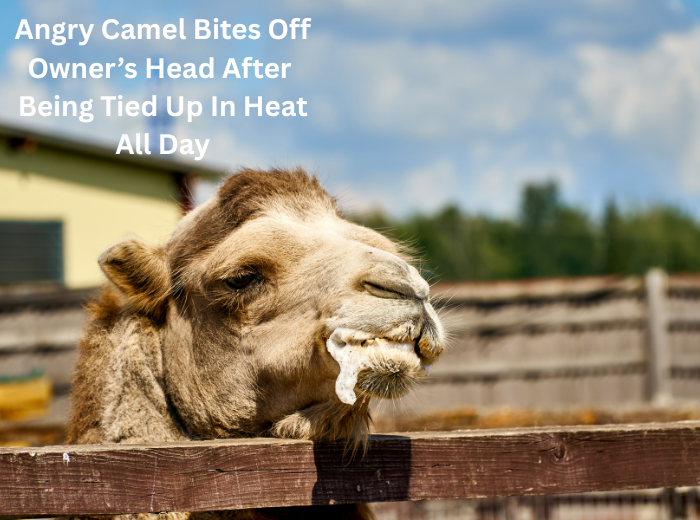
Credit: Vladimir Bolokh/shutterstock
In May 2016, a disturbing incident in Rajasthan’s Barmer district made international headlines when a camel violently attacked and killed its owner after being left tied up in the intense desert heat all day.
According to local reports, the man, known as Ujaram, had tied his camel outside with its legs bound and then went inside to entertain guests. As temperatures climbed in the afternoon, reaching extreme levels common to the region, the animal reportedly became restless.

Credit: Pond Thananat /shutterstock
Key Takeaways
-
- A camel in Rajasthan, India, fatally attacked its owner after being left tied up outside in extreme heat, reportedly killing him and severely injuring the body.
-
- The man, identified locally as Ujaram of Mangta village, tried to untie the camel after forgetting it outside all day during a heatwave when temperatures soared above 40 °C (104 °F).
-
- Villagers said the camel lifted the man and attacked him, and about 25 villagers struggled for hours to restrain the animal afterwards.
-
- While rare, camels, like many large animals, may react violently when stressed, agitated, or mistreated; this story highlights the dangers of handling large animals without proper precautions.
When Ujaram returned in the evening to free the camel, villagers said the frustrated animal turned on him immediately. Witnesses told local media that the camel lifted the man by the neck and threw him to the ground; it then chewed on his body, severing his head, before villagers intervened.
About 25 villagers reportedly spent around six hours trying to calm and control the animal before eventually subduing it. Those on the scene said the camel had shown signs of aggression in the past, though attacks of this severity remain extremely uncommon.

Credit : Kaikups/Shutterstock
Camels have long been used as working animals in desert regions, prized for their resilience to heat and ability to travel long distances with little water. However, they are still large, powerful creatures with sharp teeth and strong jaws, and like many animals, they can react unpredictably if they feel threatened, confined, or stressed.
This tragic incident has been reported by multiple news outlets over the years and often circulates on social media in various formats. Most coverage serves as a warning about the importance of animal welfare and responsible handling, especially in regions where extreme weather and close human-animal interactions are common.
While this specific story dates back several years, it underscores a broader point: even domesticated animals can exhibit dangerous behavior under certain conditions, particularly when they experience prolonged stress or discomfort. Respecting animal needs and using safe, humane restraint methods can help prevent tragedies. If real-life stories like this, and other topics that explore animals, human behavior, and life’s surprising moments, resonate with you, visit Simply Wholesome. Our platform shares thoughtful, upbeat content that encourages mindful insights, compassion, and curiosity about the world around us.














Leave a comment