

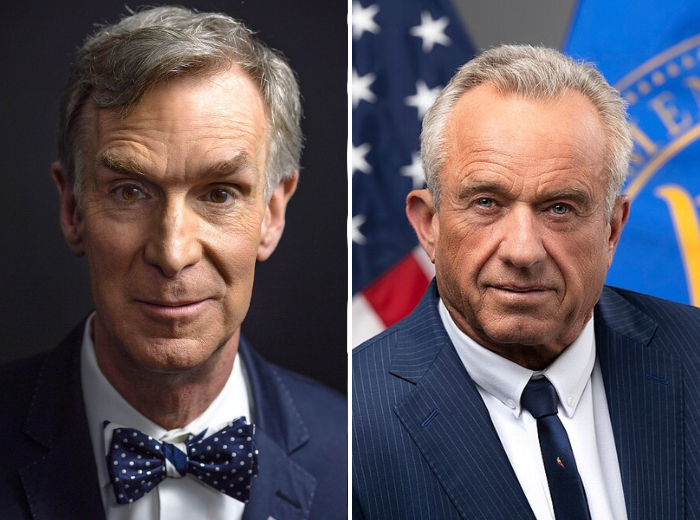
In a moment that drew widespread attention online, Bill Nye, best known as “Bill Nye the Science Guy”, and Robert F. Kennedy Jr. an outspoken vaccine critic, engaged in a public disagreement that highlighted the tension between scientific consensus and controversial claims about public health.
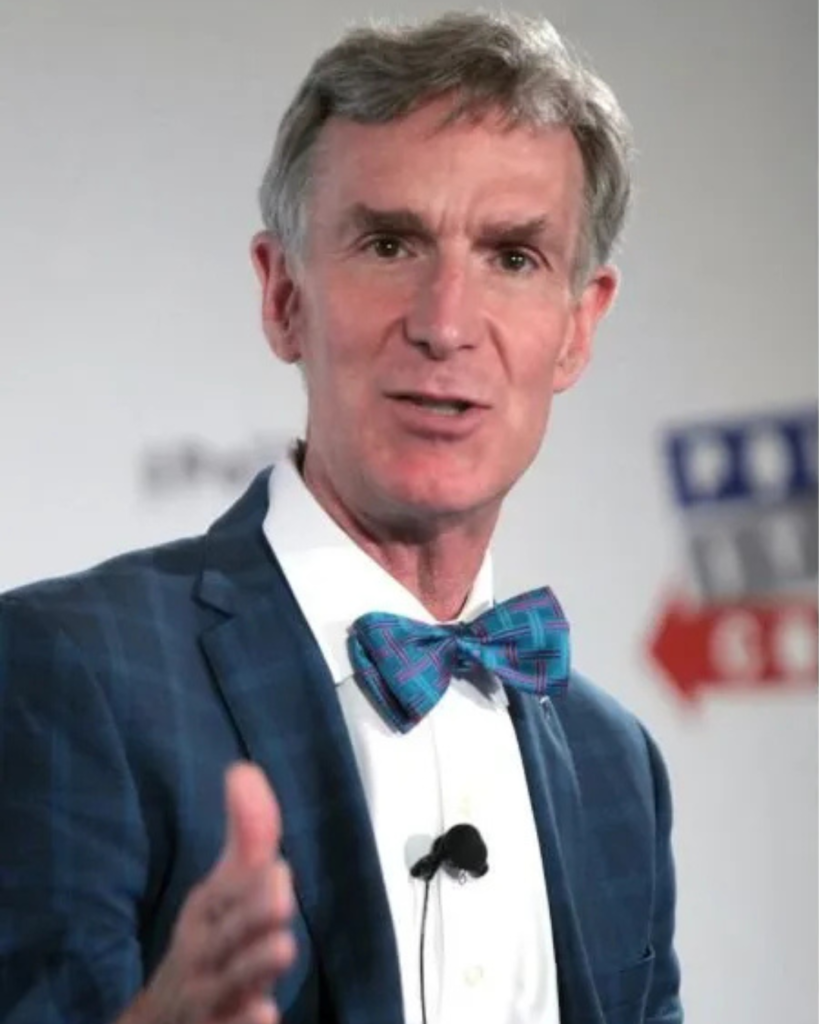
Credit: Gage Skidmore/ Wikimedia
The interaction began when Kennedy posted statements online suggesting that vaccines and the science behind them are not trustworthy, a position that contradicts the overwhelming consensus of medical experts and decades of vaccine research showing safety and effectiveness in preventing serious disease.
Key Takeaways
- Bill Nye, a science advocate and educator, publicly challenged vaccine skepticism promoted by RFK Jr.
- Nye ultimately blocked Kennedy on social media, explaining that persistent spread of misleading claims about vaccines can be harmful.
- The situation highlights larger conversations about science communication, public trust, and how to responsibly handle misinformation.
- Public reaction was mixed, both support for evidence-based information and calls for respectful exchange.
- Experts emphasize that understanding vaccines should be based on rigorous research and consensus in the scientific community.
Nye, a longtime science educator and advocate for evidence-based public health, responded directly to Kennedy’s assertions, not by promoting personal attacks, but by challenging the claims themselves and emphasizing the importance of factual accuracy.
The disagreement reached a peak when Nye blocked Kennedy on social media after repeated vaccine-related posts. Nye explained his decision by stating that the posts were spreading misinformation about vaccines, a topic he considers vitally important given the role vaccines have played in preventing illness and saving lives around the world.
Robert F. Kennedy Jr. posted messages online asserting skepticism about vaccines and mainstream scientific understanding. His statements often questioned vaccine safety and the integrity of public health institutions, positions that are widely rejected by medical organizations and hundreds of peer-reviewed studies showing vaccines to be overwhelmingly safe and beneficial.
Bill Nye publicly criticized these assertions, pointing out that rejecting well-established science can undermine public trust in proven health measures. Nye is known for promoting science education, particularly in biology, physics, and environmental science, and has frequently spoken out against misinformation when he perceives it as harmful to public understanding.
After repeated exchanges in which Nye called out what he saw as misleading or incorrect claims, he chose to block Kennedy on social platforms. Nye explained that the block was not rooted in personal animosity, but in a desire to avoid amplifying claims he believes are demonstrably false and could contribute to dangerous misunderstandings about health.
Vaccination has been one of the most impactful public health tools in modern history. Diseases like polio, measles, and whooping cough, once common and deadly, are now rare in many countries thanks to widespread immunization.
The debate between Nye and Kennedy reflects a larger cultural conversation about:
- How scientific information is communicated.
- How public figures influence perception and understanding.
- How social media amplifies both evidence-based information and controversial claims.
While it’s completely valid for individuals to ask questions and seek understanding, public health experts stress that decisions about vaccines should be grounded in rigorous science and peer-reviewed research.
This interaction generated significant discussion across social media, with many people weighing in on both the science and the tone of the conversation.
Twitter:
Several users supported Nye’s position, emphasizing scientific consensus:
- “Science isn’t about opinions, it’s about evidence.”
- “Vaccines have saved millions of lives, facts matter.”
- “Blocking misinformation is not censorship, it’s responsibility.”
Others expressed concern about tone and division:
- “We need better conversations, not just blocking people.”
- “Even when we disagree, civility helps bridge understanding.”
Reddit:
On discussion forums, users debated both the substance of the claims and Nye’s response:
- “Bill Nye doesn’t owe anyone a platform for spreading dangerous ideas.”
- “Blocking someone doesn’t change minds, but it does stop amplification.”
- “This is symptomatic of how polarized science conversations have become online.”
Facebook:
Comments reflected a mix of admiration for science advocacy and calls for empathy:
- “Thank you for standing up for facts, lives depend on it.”
- “We need respectful dialogue, not just confrontation.”
- “This shows how important it is to support science literacy.”
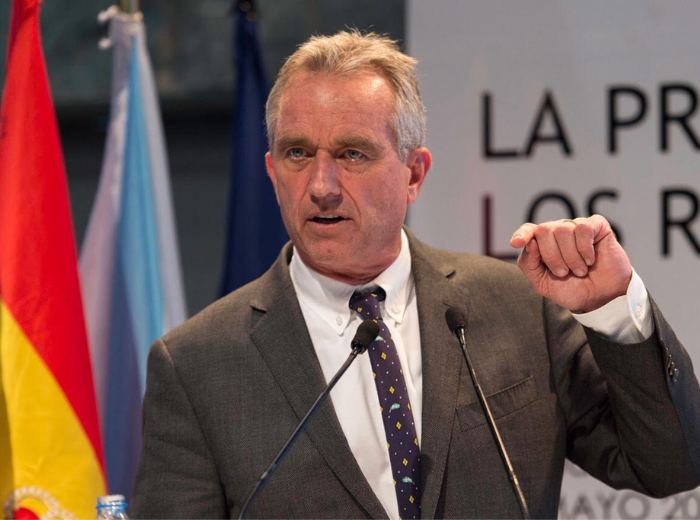
Credit: Maxlovestoswim/wikipedia
Across platforms, many people acknowledged the complexity of communicating scientific information in a media environment where misinformation can spread quickly.
This exchange isn’t just about two public figures disagreeing, it reflects how society currently navigates science, media, and public trust. It highlights the importance of:
- Clear communication of scientific facts.
- Understanding the difference between opinion and evidence.
- Encouraging respectful dialogue even amid disagreement.
- Recognizing the influence public voices carry in shaping understanding.
Whether you agree with Nye’s approach or wish for more dialogue, this moment underscores a deeply human need: to trust reliable information while maintaining respect for one another in conversation.
If this topic mattered to you, take a moment to educate yourself using trusted sources like the World Health Organization (WHO) and the U.S. Centers for Disease Control and Prevention (CDC). Share evidence-based public health information with your community, and encourage compassionate, evidence-focused conversations about science.
For more thoughtfully presented stories about science, connection, and how information shapes our lives, visit Simply Wholesome, where we highlight moments that remind us why understanding and empathy matter.










Leave a comment