

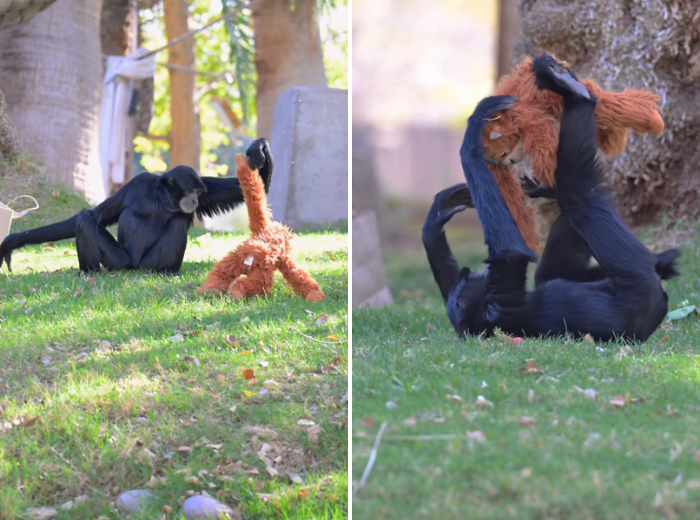
When the internet fell in love with a tiny Japanese macaque named Punch, zoos and animal lovers around the world began paying attention. In early March 2026, the Phoenix Zoo in Phoenix, Arizona, decided to join the trend in its own playful way, creating a moment that delighted animal lovers and social media users alike.
Key Takeaways
- The Phoenix Zoo in Phoenix, Arizona joined the viral “Punch the monkey” trend in February 2026 by giving a plush toy to one of its primates.
- The toy was given to Bodie, a 4-year-old siamang, as part of a behavioral enrichment activity.
- Bodie reacted with curiosity and playfulness, tossing and carrying the toy around his enclosure.
- The experiment was inspired by Punch, the baby macaque from Ichikawa City Zoo in Japan, whose attachment to a plush toy went viral in early 2026.
- The moment highlighted the importance of enrichment activities in keeping zoo animals mentally stimulated and engaged.
The story began with the viral global fascination surrounding Punch, a young macaque whose attachment to a stuffed orangutan toy captured millions of hearts online. Inspired by that phenomenon, the Phoenix Zoo decided to experiment with something similar for one of its own primates.
The zoo’s team shared the experiment on social media in late February 2026, and the moment quickly spread across platforms.
The animal at the center of the Phoenix Zoo’s version of the trend was Bodie, a 4-year-old siamang (a type of gibbon) living at the zoo with his family group.
Zoo staff introduced a plush orangutan toy into Bodie’s enclosure, similar to the stuffed toy associated with Punch’s story. Instead of using it as comfort, Bodie treated the toy like a new object of curiosity and play.
In the video shared online, Bodie cautiously approached the toy, inspected it, then began tossing it around and carrying it through the enclosure. At one point he even ran around with the plush toy in his hands as if it were a playmate.
The moment gave viewers a lighthearted glimpse into how animals explore new objects in their environment.
Zoo officials explained that the toy was part of a behavioral enrichment activity. Enrichment activities are commonly used in zoos to encourage natural behaviors and stimulate animals mentally and physically.
Behavioral enrichment can include objects animals can manipulate, puzzle feeders, new scents, or toys designed to spark curiosity and play. For primates like Bodie, these items encourage exploration, problem-solving, and social behaviors that resemble those in the wild.
The Phoenix Zoo’s experiment was directly inspired by the global attention surrounding Punch, a baby Japanese macaque born on July 26, 2025, at Ichikawa City Zoo in Chiba, Japan.
Punch became famous online after keepers gave him a stuffed orangutan toy to comfort him when his mother rejected him shortly after birth. The tiny monkey often carried the toy everywhere, grooming it, cuddling it, and curling up beside it when he felt threatened.
Videos of Punch spread across social media in early February 2026, leading to a worldwide wave of sympathy and support. Hashtags like #HangInTherePunch began trending as people followed updates about the little macaque’s progress and hoped he would eventually integrate into his troop.
That emotional story sparked curiosity among zoos and animal caretakers about how primates interact with objects like plush toys.
Unlike Punch, Bodie was never alone.
The young siamang lives in a close family group with his mother, father, and younger sibling at the Phoenix Zoo. Because of that, the plush toy wasn’t meant to provide comfort or replace social bonding.
Instead, it served as a playful enrichment tool.
Zoo staff explained that enrichment activities are designed to keep animals mentally stimulated and physically active. These activities mimic challenges animals might encounter in the wild, encouraging exploration, climbing, and manipulation of objects.
In Bodie’s case, the toy sparked immediate curiosity and playfulness, exactly the type of engagement caretakers hope to see.
Once the video appeared online, viewers quickly began sharing reactions across different platforms.
Facebook comments included:
“Proof that everyone needs a stuffed animal sometimes.”
“This is the cutest enrichment activity I’ve seen.”
“I love seeing zoos show how much thought goes into animal care.”
On Instagram, one user wrote:
“Bodie looks like he just discovered the best toy ever.”
Another commenter added:
“It’s amazing how enrichment like this keeps animals happy and active.”
Reddit users also discussed the moment, noting how enrichment activities reveal animal personalities and intelligence.
Co Modern zoos increasingly emphasize enrichment as a key part of animal welfare.
Researchers studying captive primates have found that manipulable objects, items animals can hold, carry, or explore, can increase activity levels and stimulate natural behavior patterns.
For visitors and social media audiences, these moments also provide a glimpse into the care and attention that goes into maintaining animal wellbeing.
Stories like this resonate because they show a lighter, more human side of animal care.
Seeing a curious primate explore a new toy reminds people that animals, much like humans, thrive on stimulation, play, and social interaction.
Whether it’s a baby macaque finding comfort in a stuffed companion in Japan or a playful siamang tossing around a plush toy in Arizona, these small moments connect millions of people with the natural world.
And sometimes, a simple toy can spark joy not only for the animal playing with it, but also for everyone watching.
If stories about animals, kindness, and surprising moments of connection inspire you, keep exploring more uplifting stories on Simply Wholesome, where we highlight the moments that remind us how curiosity, care, and compassion can make the world feel a little brighter.













Leave a comment