



Image credits: Wikipedia, US Department of Education, unsplash
Not everyone feels at home in the generation they’re assigned.
Some people grow up sensing they’re slightly out of step with both the group before them and the one after – remembering certain cultural moments, but not quite the same way. They relate to pieces of each era, yet fully belong to neither.
That in-between experience has a name: Generation Jones.
Key Takeaways
- Generation Jones refers to people born roughly between 1954 and 1965, positioned between baby boomers and Generation X.
- They grew up during major social change but were often too young to actively participate in defining movements of the 1960s.
- Many people in this age range say the label resonates, describing a lifelong sense of being between generations.
- Microgenerations like Gen Jones highlight how cultural timing, not just birth year, shapes identity and perspective.
The term describes people born roughly between 1954 and 1965, positioned between baby boomers and Generation X. They came of age in the shadow of the 1960s: old enough to witness its cultural shifts, but often too young to take part in them directly.
Writer and cultural commentator Jonathan Pontell coined the label after noticing that this group shared a distinct perspective shaped by timing. Many Generation Jonesers grew up watching older siblings protest wars and push for civil rights, absorbing the passion of those movements from the sidelines. But by the time they reached adulthood, the cultural energy had shifted.
They inherited idealism, but entered a different world.
The name itself reflects that feeling. It nods to “keeping up with the Joneses,” capturing the competitive social climate of their upbringing. It also echoes the slang “jonesing,” meaning a deep yearning, a sense of wanting something just out of reach. Pontell has described it as a generation shaped by hopes they witnessed more than created.

Image credits: Unsplash
As conversations about microgenerations have spread online, many people born in this window say the label finally explains something they’ve long felt.
In comment sections and discussion threads, readers often share similar reactions: that they never quite related to classic boomer stereotypes, but also didn’t fully connect with Gen X culture either.

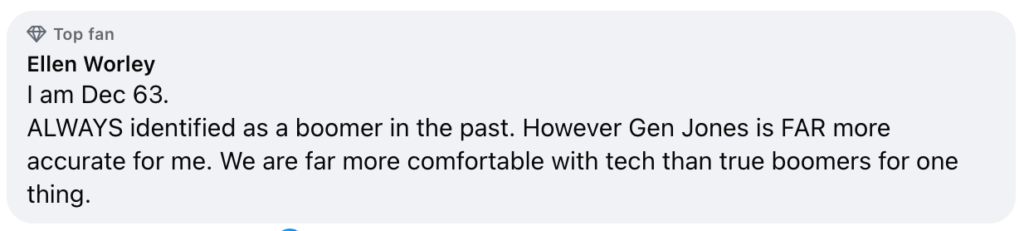

For many, discovering Generation Jones feels less like adopting a new label and more like recognizing an old feeling.
Some public figures often associated with this microgeneration include Barack Obama (born 1961) and Kamala Harris (born 1964), both positioned near the boundary between boomers and Gen X. Their life experiences reflect that same middle space: shaped by earlier social movements but forged in a later era.
Of course, generational identity isn’t determined by birth year alone. Personal experiences, family context, and culture all shape how people relate to generational labels. Many born during these years identify strongly with Gen X or boomers instead.
But for those who resonate with Generation Jones, the idea offers something simple: acknowledgment.
It recognizes that generational lines are not always clean, and that shared cultural timing can create its own identity. In a world where change happens quickly, even a few years can shape how people see history, progress, and belonging.
Sometimes, discovering a name for that in-between feeling is enough to make people feel seen.
It’s stories like these that bring people together and remind us of what truly matters. Small moments of care, empathy, and love can leave a lasting impact – not just on those involved, but on everyone who hears them.
Find more meaningful, feel-good stories on Simply Wholesome and stay connected with moments that uplift and inspire.















Leave a comment