

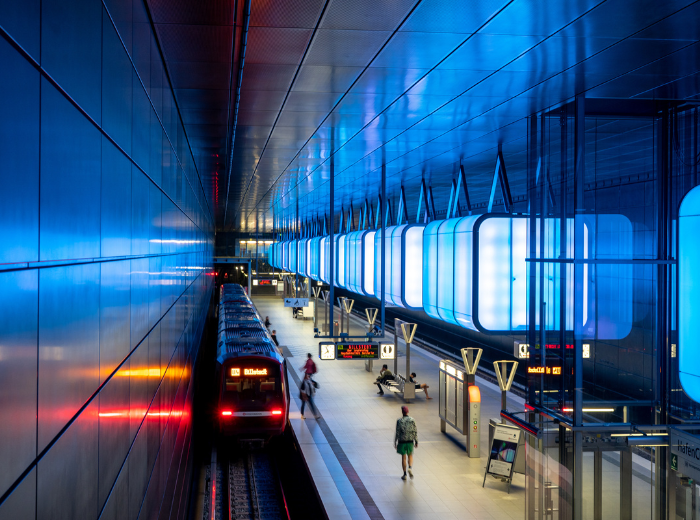
You might have heard the claim that blue lights at train stations can prevent suicide.

Image Credits: Shutterstock
Key Takeaways
- Blue safety lights were first installed at Japanese train stations in the late 2000s as a subtle way to discourage suicide during moments of distress.
- Early studies suggested a dramatic reduction in suicides, but later reviews found the data to be less conclusive than headlines implied.
- Research shows blue light may have a calming effect, but experts say calm alone doesn’t necessarily prevent impulsive actions.
- Specialists agree that physical safety measures, such as platform barriers, are more effective, with blue lights serving at best as a small supporting tool rather than a solution.
The idea started in Japan in the late 2000s when railway companies began installing soft blue lights along station platforms. The thinking was that blue light has a calming effect, and that calm, even briefly, could interrupt a dangerous moment.
Image Credits: Shutterstock
A few years later, a scientific study made headlines around the world. According to early reports, suicides at stations with blue lights dropped dramatically. Some articles even claimed reductions of more than 80 percent. The story spread fast, especially online.
But here’s the part that got lost.
When researchers took a closer look, they realized the situation wasn’t that clear cut. The data varied a lot depending on the station, the time of day, and whether the lights were even noticeable. In outdoor stations, the blue lights were sometimes barely visible in daylight.
There was also a big issue with how the numbers were reported. The original study showed a very wide range of possible effects. In simple terms, the impact could have been meaningful or fairly small. The headlines focused on the biggest number, not the uncertainty behind it.
That doesn’t mean blue lights do nothing.
There is evidence that blue light can help people relax after stress. One later study showed people calmed down faster in blue lit rooms. But experts point out something important: feeling calmer doesn’t automatically change someone’s actions. Especially in moments driven by impulse or crisis.
Because of that, many researchers say physical safety measures matter more. Things like platform screen doors or barriers physically prevent harm. They cost more, but they work in a way lights simply can’t.
Image Credits: Shutterstock
Interestingly, even scientists who studied blue lights have said they shouldn’t be treated as a solution on their own. At best, they’re one small piece of a much larger puzzle.
Still, the idea has spread. Blue lights have appeared at stations and crossings in other countries, including parts of the UK. They’re affordable, easy to install, and they signal concern, which does count for something.
In the end, suicide prevention isn’t about one clever trick. And sometimes, small changes help, just not in the dramatic way viral stories suggest.
It’s stories like these that bring people together and remind us of what truly matters. Small moments of care, empathy, and love can leave a lasting impact – not just on those involved, but on everyone who hears them.
Find more meaningful, feel-good stories on Simply Wholesome and stay connected with moments that uplift and inspire.











Leave a comment