

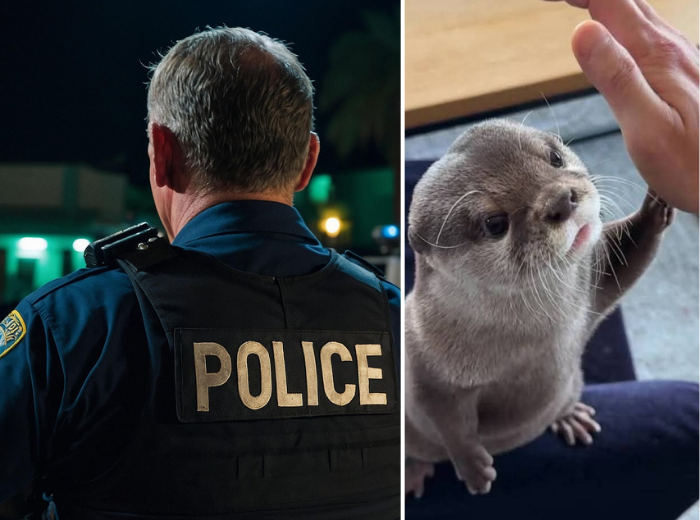
What sounds like a scene from a nature documentary is now real life: a specially trained otter is being deployed by law enforcement to help locate human remains underwater, a task once thought exclusive to dogs and human divers.
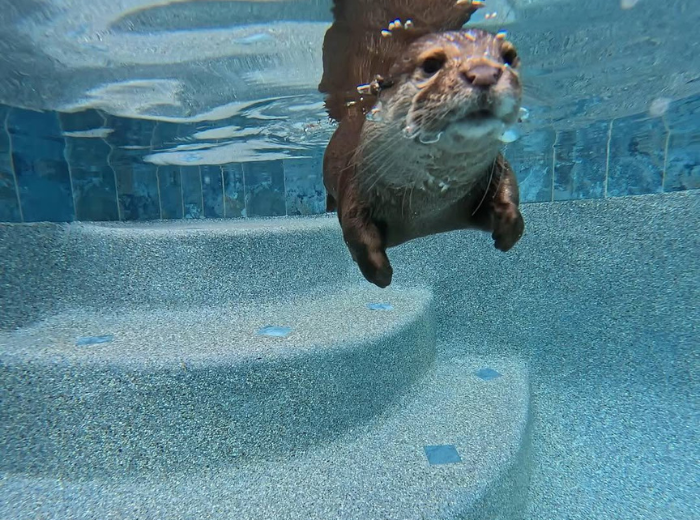
Meet Splash, a two-year-old Asian small-clawed otter living in Englewood, Florida, who has become the first of his kind to assist in search and recovery work across the United States.
Credit : Peace River K9 Search and Rescue Association Inc./fb
Key Takeaways
- Splash is an Asian small-clawed otter trained for underwater search and recovery work that law enforcement historically struggled with.
- He was trained by Michael Hadsell, founder of Peace River K9 Search and Rescue (PRSARK9), based in Southwest Florida.
- Splash uses unique otter biology, including underwater scent detection via “bubble sniffing”, to locate submerged human remains more precisely than dogs can in low-visibility water.
- As of early 2026, Splash has been part of more than 27 search missions with six confirmed finds, including four bodies.
- His work has drawn interest from agencies nationwide, and trainers hope to expand the concept to help other search teams.
Say What?! | Search & Recovery Otter
Police departments have long relied on dogs because of their powerful noses. But when it comes to bodies of water, especially in murky conditions, dogs often struggle, they can’t easily go underwater, and human divers are limited by visibility and safety concerns.
That’s where Splash comes in.
Credit: Peace River K9 Search and Rescue Association Inc./fb
Otters can “smell” underwater, not in the traditional way but by a technique that scientists describe as “bubble sniffing.” This is when an otter exhales tiny bubbles through its nose underwater, then inhales them back, effectively capturing odor particles and allowing the animal to detect scents submerged beneath the surface.
Splash’s handler, Michael Hadsell, has more than four decades of experience training search and rescue animals, dogs, horses, and other species, through PRSARK9. The idea for training an otter came from reading about fishermen in Bangladesh and India who used river otters to help drive fish into nets, hinting at the animal’s keen underwater abilities.
Training involved associating the scent of human remains with a specific cue. Splash was encouraged to dive after an object marked with the scent and return to his handler to indicate a match, often earning salmon as a reward. A system of gentle tugs on a string attached to a harness taught him communication commands underwater.
Credit: Peace River K9 Search and Rescue Association Inc./fb
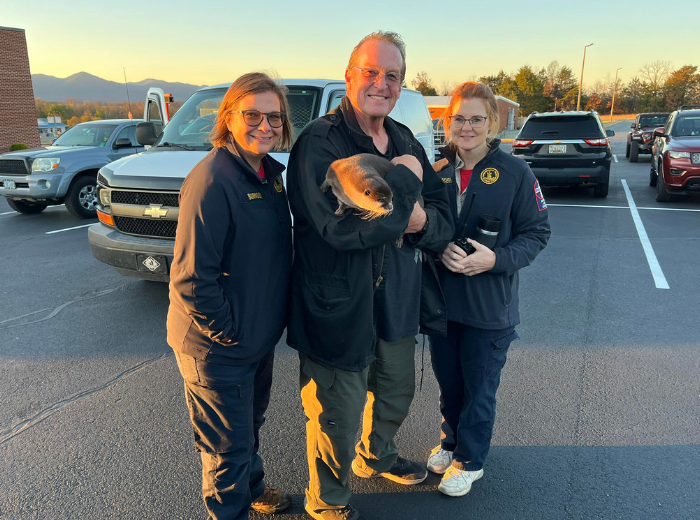
Since completing his training, Splash has been deployed in real cases, from rivers and lakes in Florida to missions in other states like Alabama and Mississippi, helping teams locate evidence and remains in places where traditional search methods struggled.
In one reported case, when human remains were suspected underwater but not found by dogs or divers, Splash identified an area of interest. When investigators dredged that spot, they located a brick later used to tie a cold case suspect to a victim’s murder, a breakthrough in a decades-old investigation.
Below is a video that showcases the unique idea of a search-and-recovery otter and how such training works
The concept of training otters for recovery work isn’t just a quirky animal story, it solves a real investigative problem. Bodies of water pose a persistent challenge for detectives, forensic teams, and divers, especially when visibility is low or debris hides evidence. Splash’s olfactory and swimming skills overcome many of these barriers.
In Pensacola, Florida, for example, officials brought Splash in to assist the search for a missing woman in February 2026. While he ultimately wasn’t needed because the woman was found safe on land before deployment, authorities and his trainer confirmed the value of having him on standby for future cases.
Demand for his services is growing, with more law enforcement agencies requesting assistance. Hadsell and his team are even considering training additional otters to support expanded search efforts nationwide.
Despite the serious nature of the work, Splash’s abilities have also captured public imagination. He’s become an online sensation with social media posts from his handler’s pages drawing widespread attention, blending respect for his contribution with fondness for his charisma.
Splash’s story highlights several important points:
- Animal intelligence and biology still surprise us, and can be harnessed in ways that expand human capability.
- Innovation in recovery work can come from unexpected places, not just technology or traditional training.
- Compassion and collaboration between species continue to yield breakthroughs in public safety and investigation.
Whether Splash becomes part of a larger network of otter training programs or remains one unique pioneer, his work is already reshaping how search teams think about detection beneath the water’s surface.
At its core, this story is about adaptability, how humans working with the natural instincts of another species can create solutions that were once unimaginable. Splash doesn’t replace dogs or divers, but he complements them, offering a tool that is especially effective in conditions where others struggle.
This unusual but powerful partnership reminds us that the natural world still holds many surprises, and that sometimes, inspiration can come from the most unexpected friends.
If Splash’s story inspired you, share it with those who love learning about real breakthroughs, especially ones that show kindness and ingenuity crossing species boundaries.
For more uplifting and fascinating stories about resilience, innovation, and the power of connection across the natural world, visit Simply Wholesome, where every story reminds us how much wonder and goodness is still possible in our shared world.








Leave a comment