

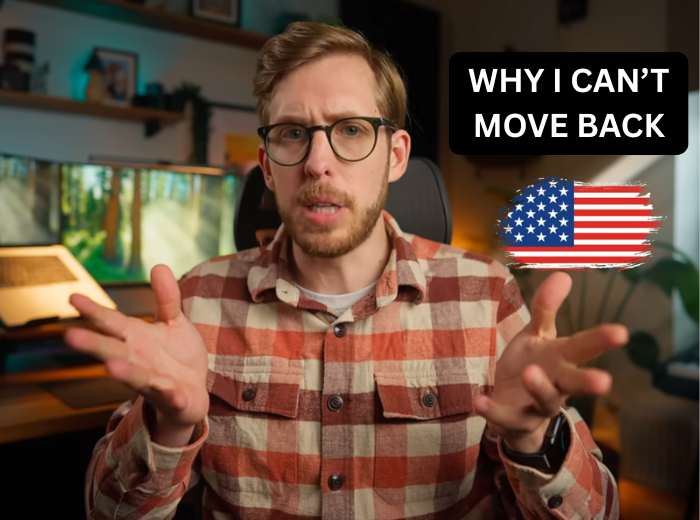
Credit: Evan Edinger
What begins as culture shock often turns into clarity. And once that clarity sets in, going back doesn’t always make sense.
For many Americans, leaving the U.S. starts as a temporary plan, a job opportunity, a relationship, and a few years abroad for experience. But for a surprising number of people, living in Europe (and beyond) triggers a deeper realization: life doesn’t have to feel this hard, this anxious, or this precarious.
Key Takeaways
- Living abroad often reveals how normalized stress, violence, and insecurity are in the U.S.
- Universal healthcare dramatically changes people’s relationship with fear, illness, and money
- Many expats report improved mental and physical health after leaving
- Community care, safety, and dignity are felt more tangibly in many European countries
- Once experienced, these systems are difficult to give up
A recurring theme across stories is how much background fear Americans carry without realizing it, fear of medical bills, job loss, violence, and financial collapse.
Tameka Lim, who moved to Spain, described it bluntly:
“It took me about two years there to realize the level of violence (in all forms!) we experience every day as citizens in the USA.”

That realization is echoed again and again, not as political theory, but as lived experience.
Healthcare is one of the most frequently mentioned turning points.
Michelle A. Mead, who lived in Australia and Paris, shared a moment that reshaped her understanding entirely:
“I broke my leg in Australia. Didn’t shell out a penny for the emergency room, doctor, cast, crutches or meds.”
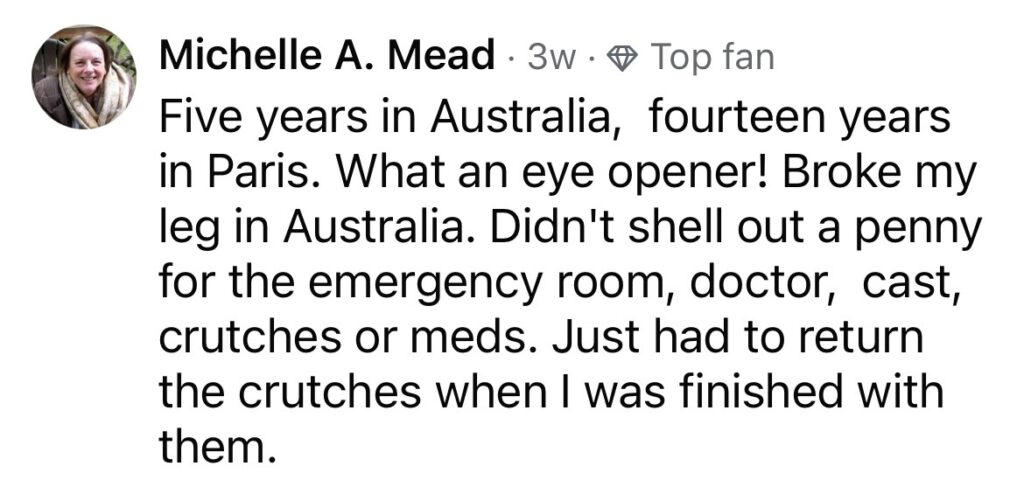
She added that the only requirement was returning the crutches when she was done.
Elisa Bremner summed up the divide clearly:
“There are only two types of people against universal healthcare — those who have never experienced it, and those who profit from the broken system.”
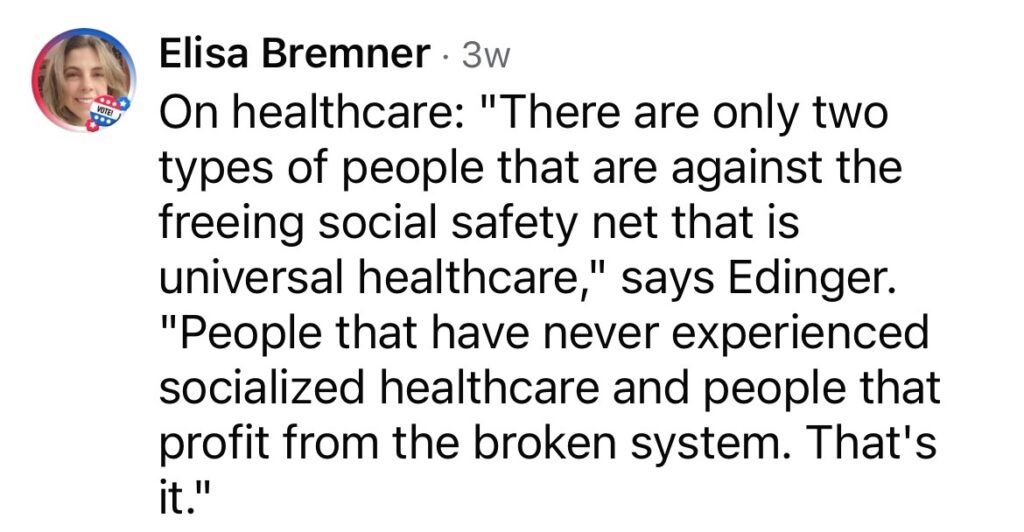
For many Americans abroad, healthcare stops being a source of fear, and becomes just another part of life.
Beyond healthcare, people talk about how differently they are treated day to day.
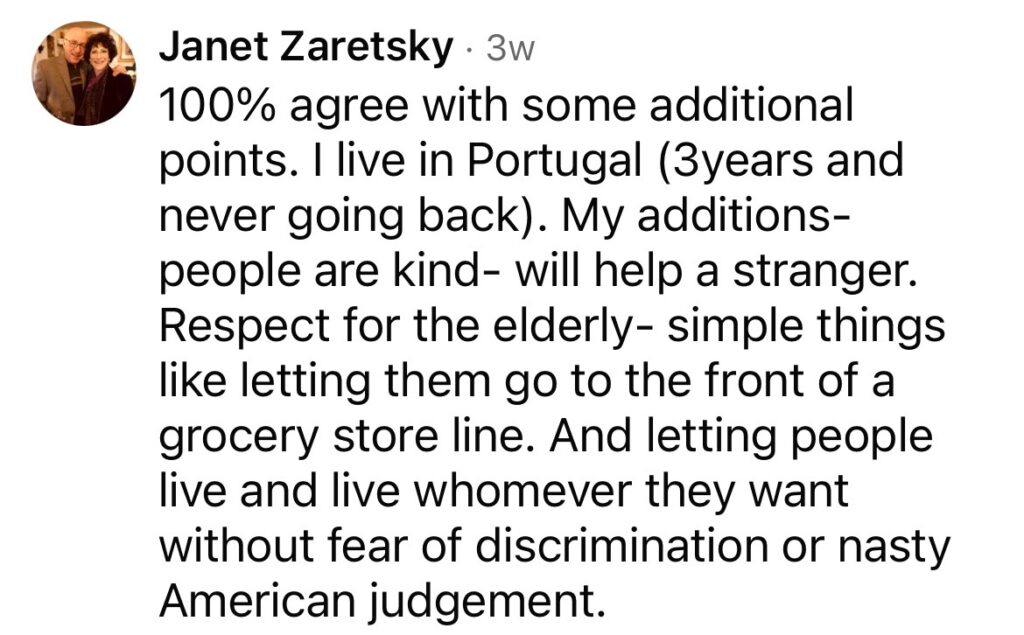
Janet Zaretsky, living in Portugal, pointed out subtle but powerful differences:
“People are kind. They help strangers. There’s respect for the elderly — letting them go first in stores — and letting people live and love without fear of judgment.”
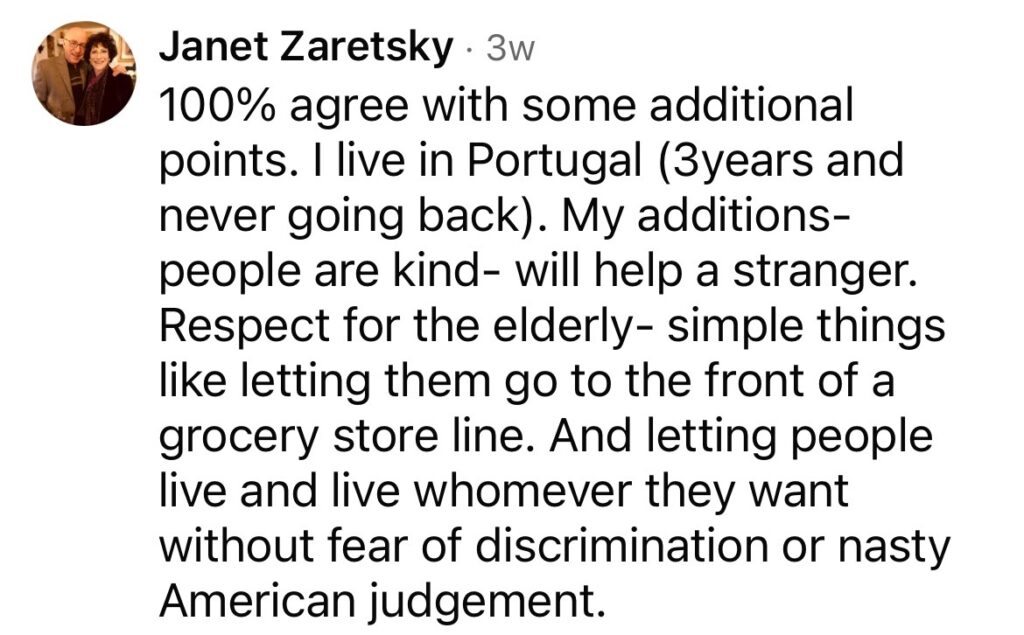
Others echoed similar experiences across Germany, Denmark, Switzerland, Spain, and the UK.
Blake J. Askew, a Brit living in Berlin, shared:
“My mental and physical health improved drastically. My diabetes is under control.”
These weren’t dramatic lifestyle overhauls, they were the result of systems designed to reduce stress rather than monetize it.
What’s striking is how many people left with no intention of staying permanently, and never returned.
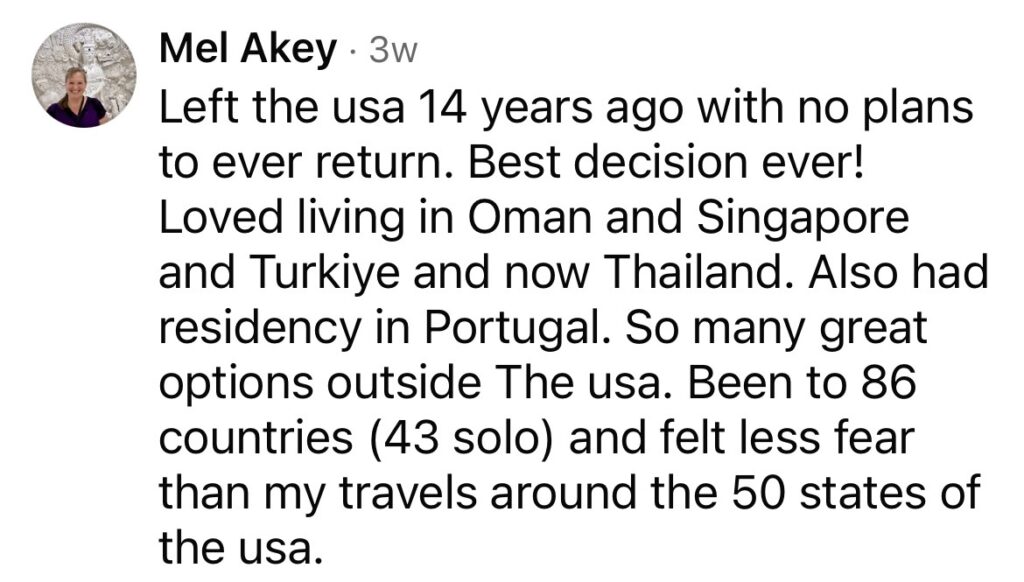
Mel Akey, who left the U.S. 14 years ago, wrote:
“Best decision ever. Been to 86 countries and felt less fear than my travels around the 50 states.”
Others shared similar timelines:
- 7 years in Spain
- 18 years in Switzerland
- 35+ years in Denmark
- Decades in Germany and Portugal
The common thread wasn’t wealth, it was stability.
As Chloë Field noted after returning to the UK:
“You earn more in the US, but you need to — because you can lose your job or face massive medical bills with no warning.”
Living abroad doesn’t just change where people live, it changes how they see their home country.
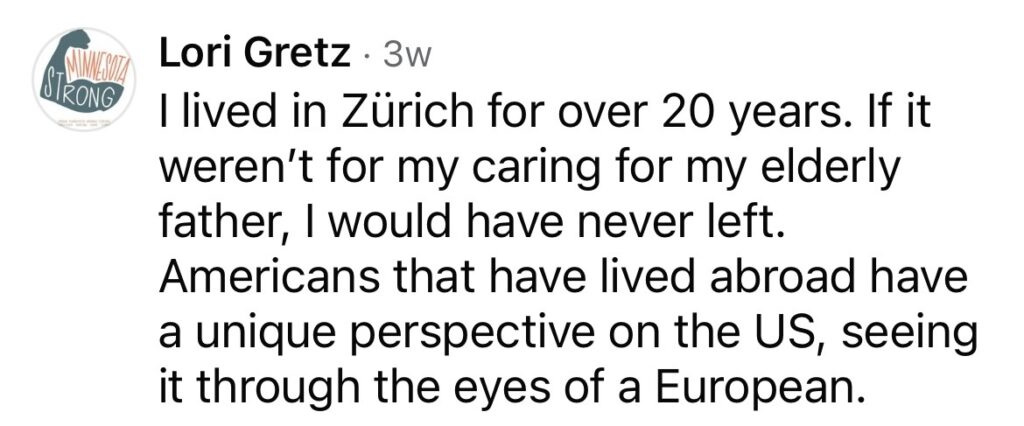
Lori Gretz, after decades in Zürich, explained:
“Americans who have lived abroad have a unique perspective on the US — seeing it through European eyes.”
Credit: Evan Edinger
Once that lens is applied, many find it impossible to unsee the contrast.
Stories like these aren’t about “America vs. Europe.” They’re about perspective, and what happens when people realize that safety, healthcare, and dignity don’t have to be luxuries.
If stories that challenge assumptions, reveal lived truths, and explore how systems shape everyday life resonate with you, Simply Wholesome shares more human-centered narratives that help make sense of the world we’re living in.
Sometimes, seeing another way of life is all it takes to question the one you were taught to accept.











Leave a comment