

Credit: shutterstock
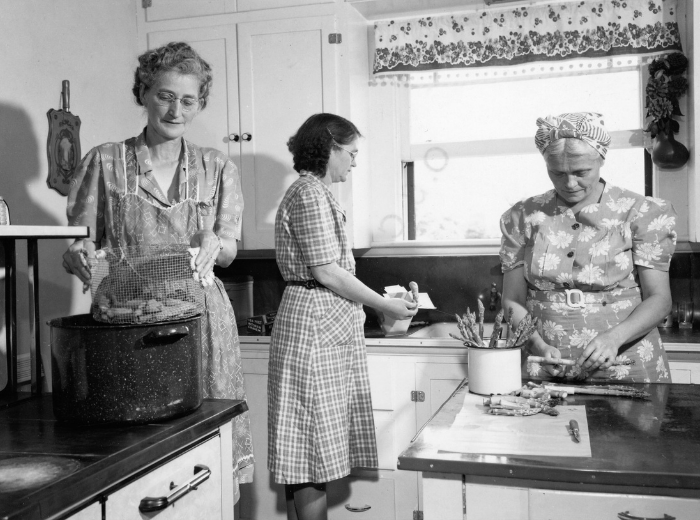
What looks like hoarding to later generations often has a very different origin story. For many families, habits like saving string, washing plastic bags, keeping extra food, or never throwing anything away weren’t quirks, they were survival skills. Passed down quietly through parents and grandparents, these behaviors were shaped by the Great Depression and reinforced by World War II, when scarcity wasn’t hypothetical. It was daily life.
Decades later, those lessons still live on in kitchens, garages, and pantries across generations.
Credit: shutterstock
Key Takeaways
- The Great Depression and WWII created a lasting scarcity mindset that persisted long after conditions improved
- Food rationing, unstable employment, and poverty reshaped daily habits around saving, reusing, and never wasting
- Many children and grandchildren misunderstood these behaviors without knowing their historical roots
- These practices were often driven by love, sacrifice, and fear of instability, not excess or greed
- The emotional imprint of hardship can last a lifetime, and beyond
For families who lived through the Depression, nothing was guaranteed. Jobs disappeared overnight. Businesses closed. Food could be scarce. Even when money existed, supplies often didn’t.
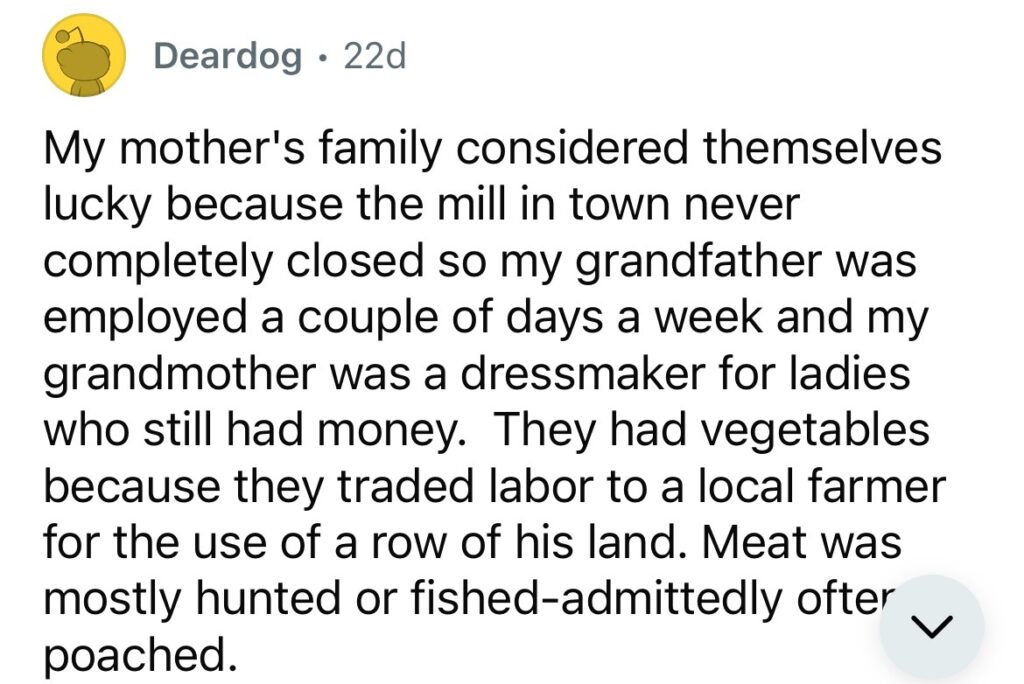
One commenter, Deardog, explained how their grandparents survived through barter rather than cash:
“They had vegetables because they traded labor to a local farmer for the use of a row of his land. Meat was mostly hunted or fished — admittedly often poached.”
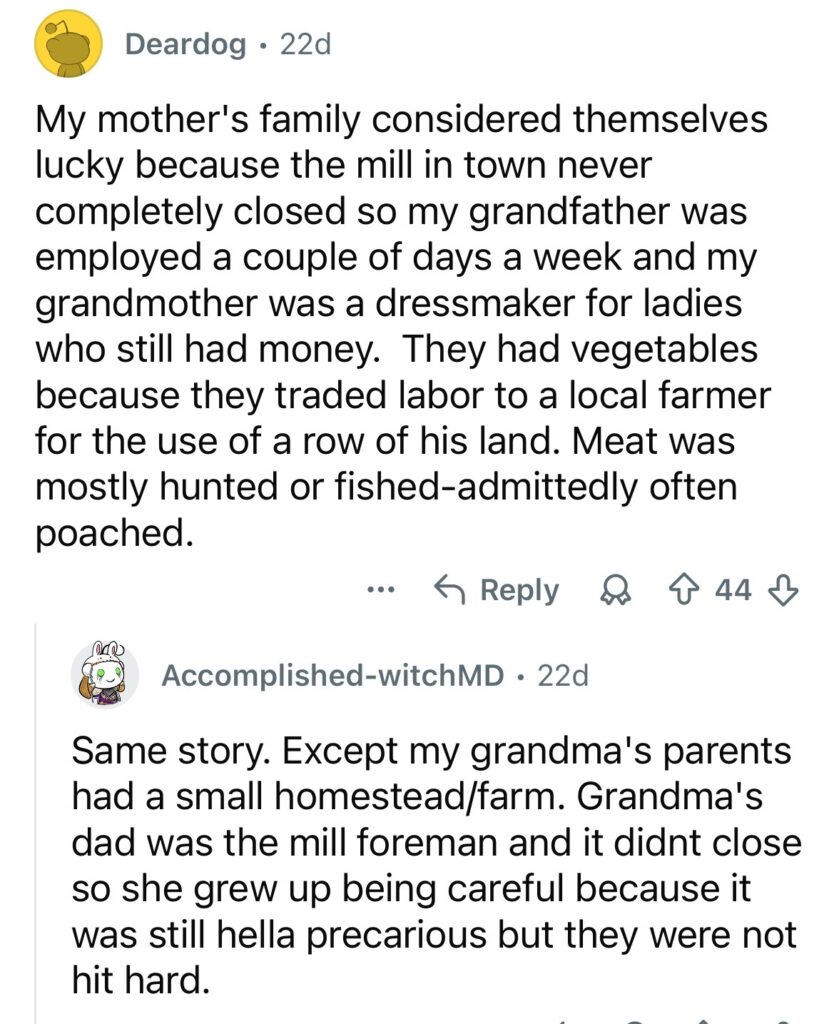
Another shared a similar experience, noting that even families who were relatively stable lived cautiously:
“My grandma’s dad was the mill foreman and it didn’t close… they weren’t hit hard, but it was still hella precarious.”
That constant sense of almost losing everything shaped how people lived long after the crisis ended.
Many children of Depression survivors grew up surrounded by objects that seemed useless or excessive.
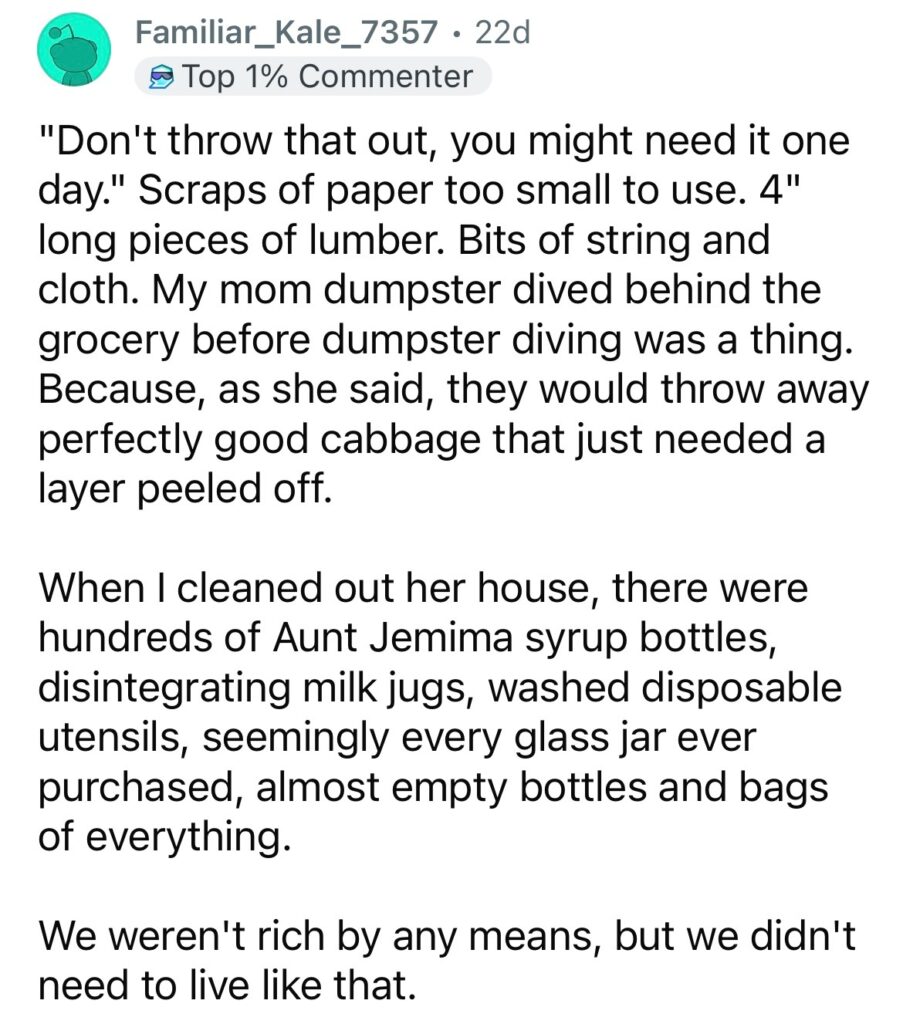
Familiar_Kale_7357, a top commenter, described a home filled with saved items:
“Scraps of paper too small to use. 4-inch pieces of lumber. Bits of string and cloth… hundreds of syrup bottles, disintegrating milk jugs, washed disposable utensils, every glass jar ever purchased.”
They added something telling:
“We weren’t rich by any means, but we didn’t need to live like that.”
But for their mother, throwing things away felt dangerous, because once, everything was needed.
Some stories reveal just how personal and painful that survival was.
Early-Reindeer7704 shared a detailed account of their grandmother’s life in a New York City cold-water flat:
“Grandpa had two shirts, one to wear while the other was washed… Grandma existed on black coffee so my aunt and mother could have an egg.”
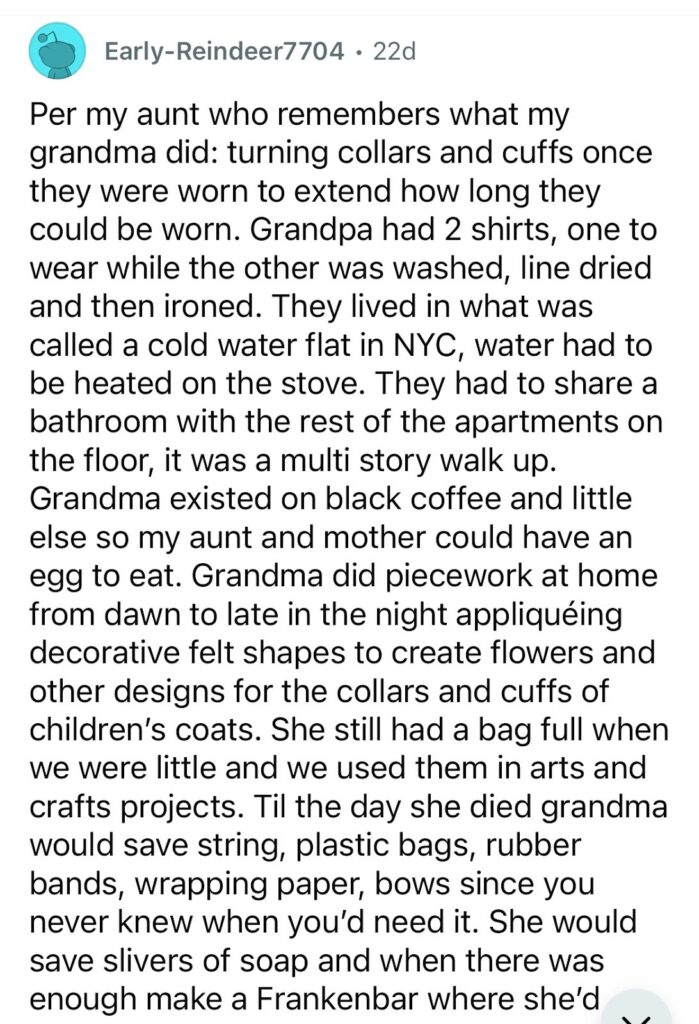
She worked from dawn until late night, doing piecework at home to earn pennies, saving string and wrapping paper until the day she died.
Those habits weren’t nostalgia. They were memory.
 For many families, hardship didn’t end with the Depression. World War II followed, bringing rationing and shortages even to those who had regained some stability.
Alanfromsocal explained:
“First there was no money to buy anything. Then there was nothing to buy. All essential goods, including food, were rationed.”
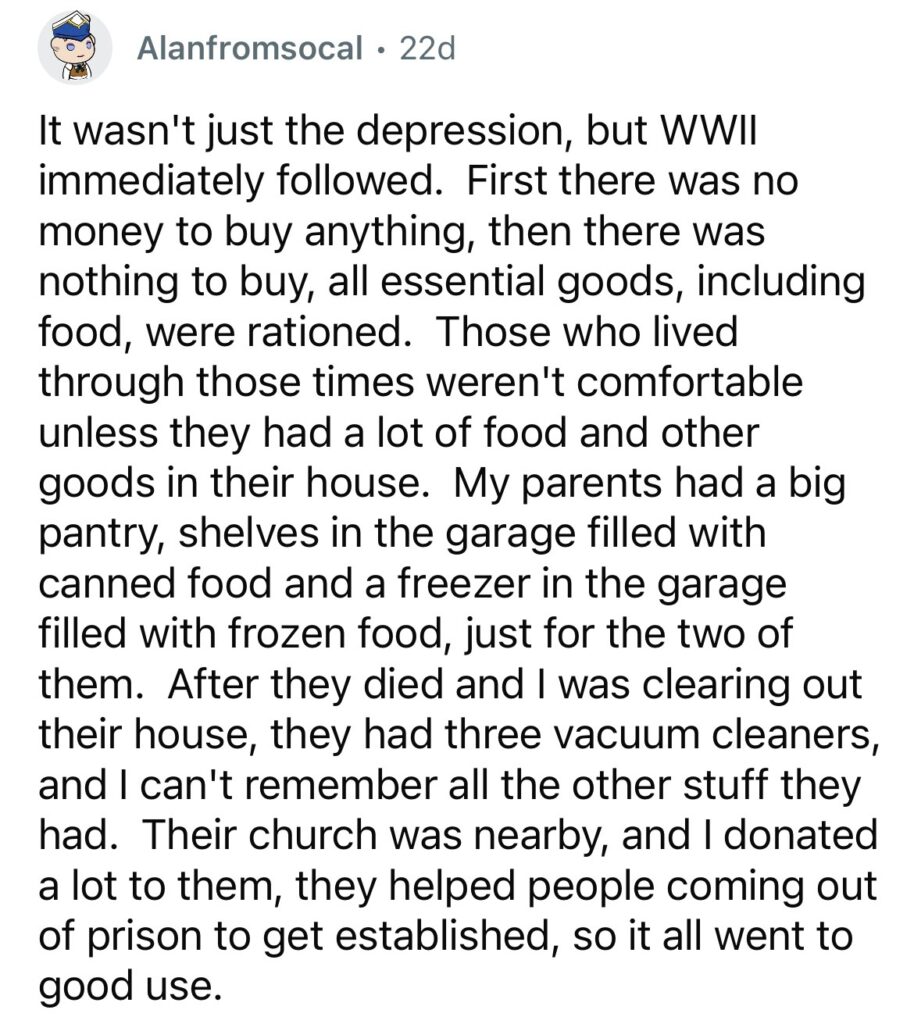
That’s why their parents kept overflowing pantries, freezers, and backups of everything:
“They weren’t comfortable unless they had a lot of food in the house.”
To them, abundance wasn’t indulgence, it was safety.
What later generations sometimes label as hoarding, anxiety, or over-preparation is often the echo of lived trauma. These habits were expressions of love: ensuring children would eat, that families would survive, that nothing ever went to waste again.
They are reminders that comfort today was built on caution yesterday.
Do the older people in your life save everything? Keep pantries full? Refuse to throw things away “just in case”?
Credit: shutterstock
Stories like these remind us that behind everyday habits are histories of resilience, sacrifice, and survival.
For more human stories that uncover the meaning behind everyday behavior and generational memory, visit Simply Wholesome, where lived experience meets empathy, and history is remembered through people.













Leave a comment