

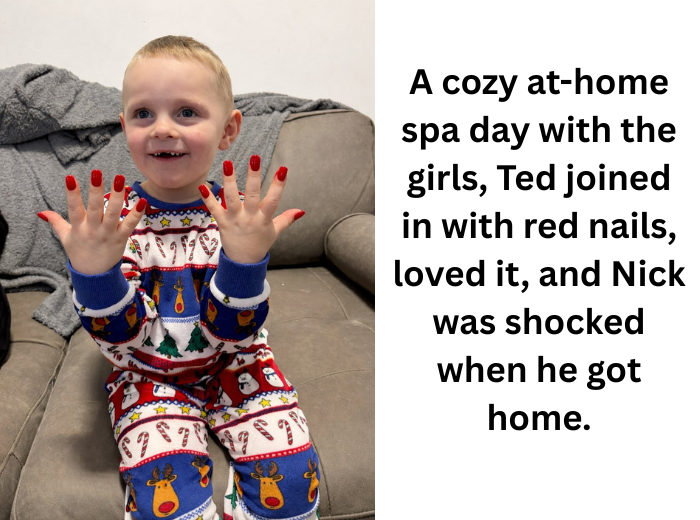
Credit: The Smithy Family/FB
A quiet afternoon at home turned into a viral parenting Debate after The Smithy Family shared a moment many parents will recognize: siblings bonding, a child wanting to join in, and adults navigating boundaries in real time.
While dad Nick was out working, mum Jess spent the day with their daughters enjoying a simple at-home spa session. Nail polish, laughter, and sibling fun filled the room, and naturally, their young son Ted wanted to be part of it too.
Key Takeaways
- This moment wasn’t about gender, colors, or identity, it was about a child wanting to join in and feel included during a family moment.
- The father’s reaction, while widely criticized online, was later clarified as a boundary issue about gel and shellac nails, not about nail polish itself.
- The parents’ follow-up showed how easily private parenting disagreements can be misunderstood once shared publicly.
- Public reaction highlighted a broader cultural conversation around childhood expression, boundaries, and gender expectations.
- Many parents shared similar experiences, reinforcing that play, imagination, and curiosity are a natural part of growing up, regardless of gender.
- The story underscores an important truth: loving children, setting boundaries, and learning as parents can coexist, even when emotions run high.
So Ted got his nails painted bright red.
He loved them.
Jess snapped a photo and sent it to Nick with a lighthearted message:
“Look at Ted’s new nails 💅🥰 xx”
What followed was a private exchange that quickly became public, and polarizing.
In the screenshots later shared online, Nick’s immediate reaction was one of anger and alarm. His replies included frustration, concern about “confusing” Ted, and a tense warning that he was coming home upset.
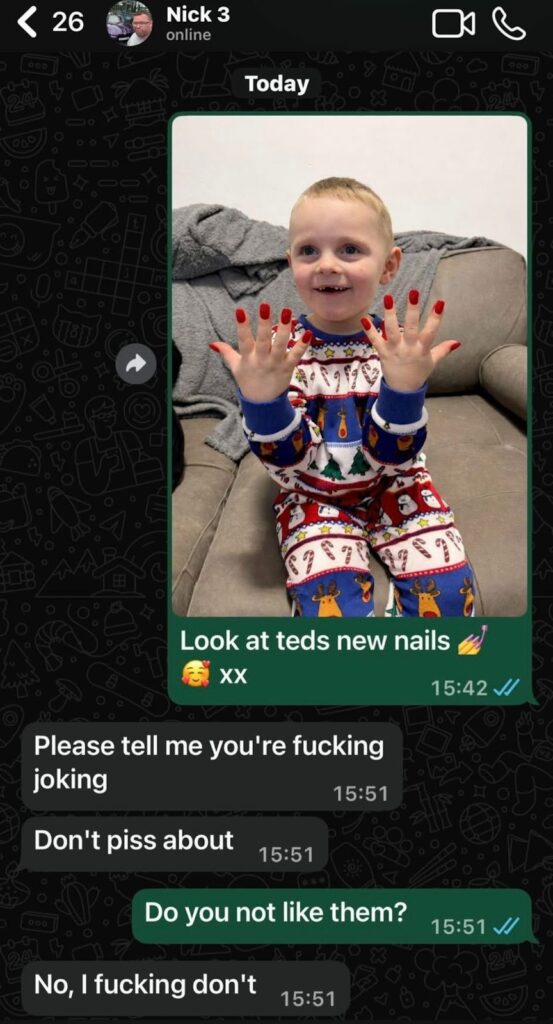
Jess responded calmly, explaining that Ted had asked for the nails himself and was happy. She urged Nick not to come home angry, reminding him that Ted loved them.

Once the images circulated, they ignited intense reactions, with many viewers interpreting the exchange as a clash over gender norms and childhood expression.
But that wasn’t the full story.
After the post gained traction, The Smithy Family issued a public clarification to address growing misconceptions.
They explained that the disagreement was not about colours, gender, or Ted joining his sisters, all of which they fully support. Painting nails, dressing up, playing along, and self-expression have never been an issue in their household.
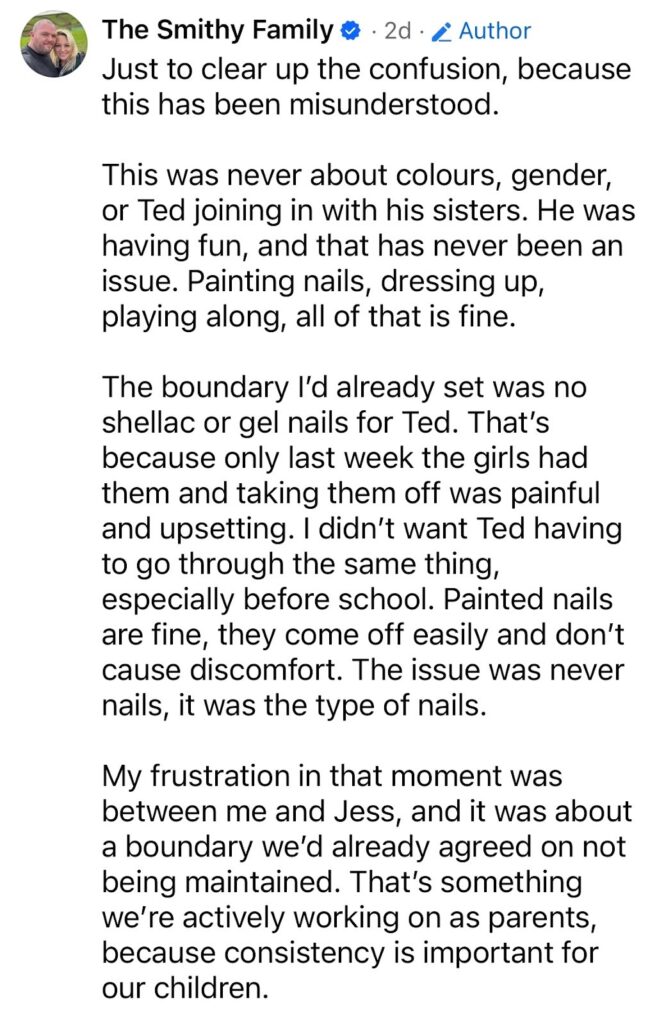
The real concern, Nick explained, was the type of nails.
Ted had been given gel/shellac nails, which require painful removal. Only a week earlier, the girls had struggled and cried while having theirs taken off. Nick had previously set a boundary: no gel or shellac for Ted, especially before school.
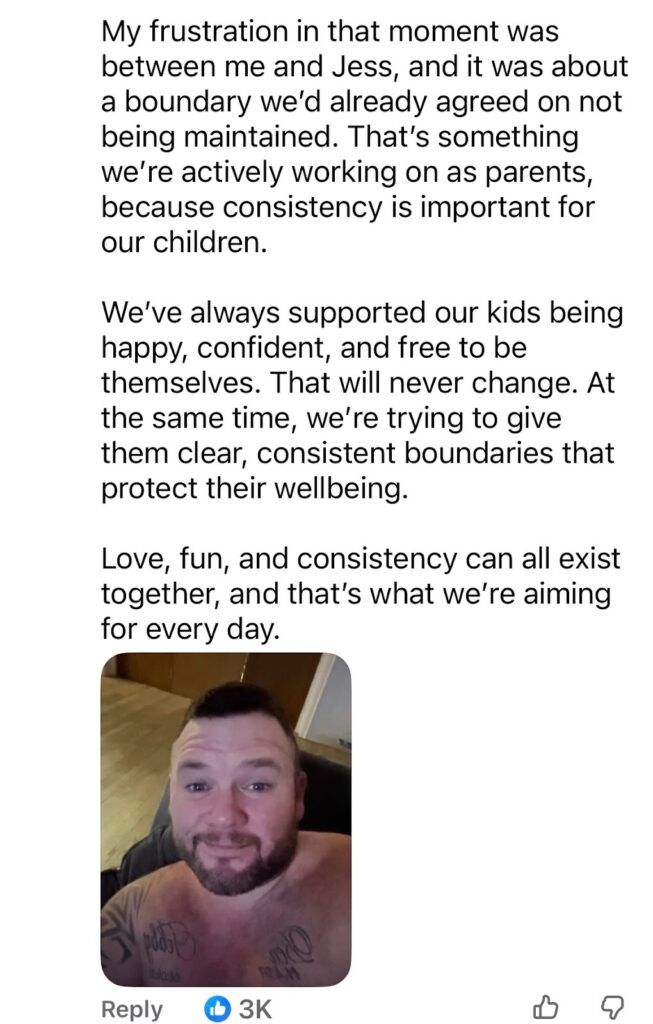
Painted nails? Completely fine.
Gel nails? Not something he wanted Ted to experience.
His frustration, he said, was about a parenting boundary not being maintained, not about Ted’s identity or self-expression.
“Love, fun, and consistency can all exist together, and that’s what we’re aiming for every day.”
As expected, the internet had a lot to say.
Across Facebook and Instagram, countless people recalled dressing up brothers, painting sons’ nails, or watching boys happily play alongside sisters, with no lasting impact on who they became.

Parents emphasized a common theme: children exploring joy does not define their future identity.
Others highlighted how inclusion matters, especially in sibling dynamics. And how small moments of belonging shape emotional security.
Some commenters sided firmly with Nick, arguing that parents have the right to set limits without public scrutiny. They emphasized discipline, structure, and raising boys with traditional expectations, even if others disagreed.
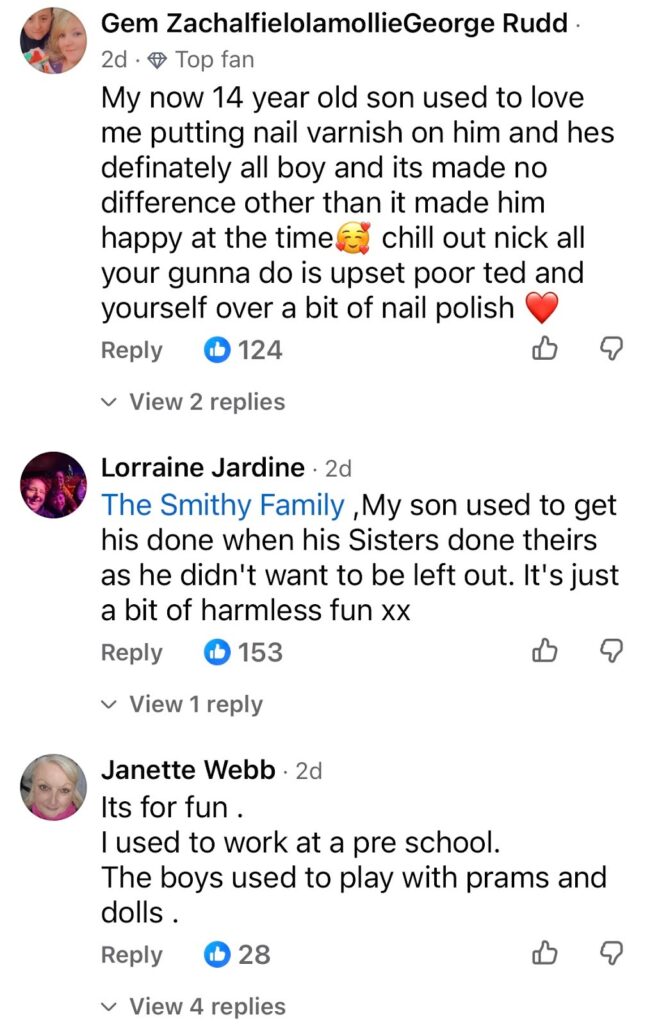
A few responses were sharply critical, calling the situation “embarrassing” or accusing both parents of mishandling a private family disagreement in public.
A large portion of responses urged people to slow down.
They pointed out that:
- Parenting disagreements happen daily
- Context is often missing online
- Viral outrage can distort real family dynamics
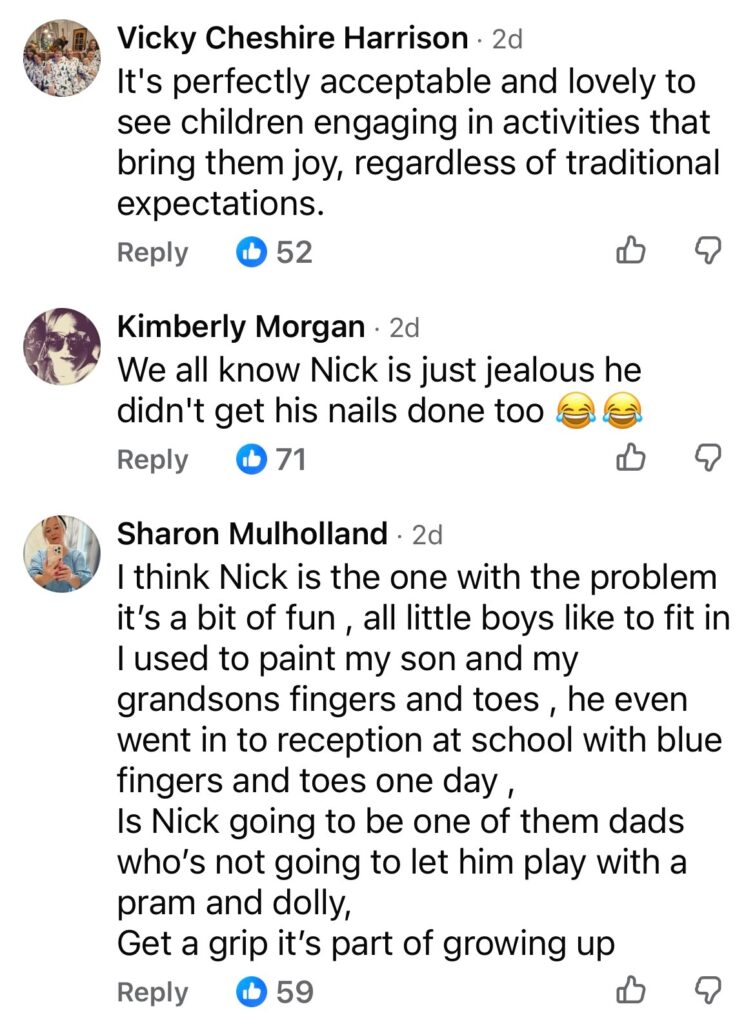
Several commenters stressed that consistency, safety, and emotional wellbeing can coexist with freedom, creativity, and play.
At its core, this wasn’t just about nail polish. It became a mirror for much bigger conversations:
- How society views boys and softness
- How quickly private moments become public judgment
- How easily nuance is lost in viral narratives
- How parenting boundaries are interpreted through cultural lenses
Most importantly, it showed how children’s harmless joy often becomes adult projection.
Ted wasn’t making a statement. He wasn’t confused. He was playing with his sisters and having fun.
Children explore the world through play. Parents navigate love, protection, boundaries, and mistakes, often imperfectly and under pressure.
This story resonated because it touched something universal: the tension between letting kids be kids and trying to do right by them in a world that watches, judges, and reacts instantly.
If nothing else, it reminded many people of a simple truth:
Childhood joy doesn’t need defending, it needs understanding.
At Simply Wholesome, we highlight stories that remind us to slow down, lead with compassion, and remember what truly matters.
Visit us for more moments that celebrate humanity, in all its messy, meaningful forms.














Leave a comment