

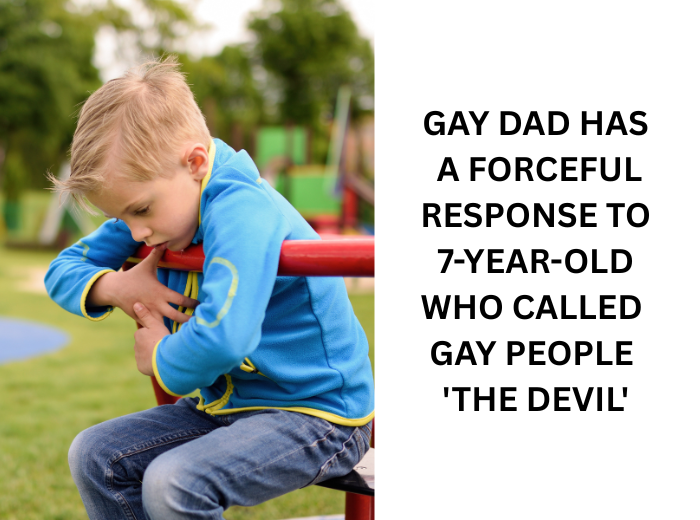
Credit: shutterstock
When a young child repeated a hateful message to his son, one father didn’t yell. He didn’t shame. He didn’t escalate.
He responded calmly, and honestly.
That response, later shared online, has since gone viral. Not because it was dramatic, but because it was painfully familiar.
Key Takeaways
- A father’s measured response to a child repeating homophobic beliefs went viral after being shared online.
- The moment highlighted how hate is often learned, not innate, and passed down through adults.
- Thousands of people shared personal stories about confronting prejudice directed at their children.
- The discussion reignited debate about religion, parenting, and accountability without cruelty.
The child had told his son that “God says gay people go to hell.” The words didn’t come from nowhere. They were inherited. Learned. Passed down without understanding.
Instead of attacking the child, the father addressed the belief itself. He made it clear that those words were unkind, untrue, and hurtful. Also, repeating them has consequences in the real world.
The moment struck a nerve. Because for many families, this wasn’t hypothetical. It was personal.
As the story spread, comments flooded in from parents who had lived through similar moments.
William Parry-Jones shared how he and his partner were once called “bent freaks” by a 12-year-old on the way home from school.
“Hate starts early,” he wrote, a sentence that echoed throughout the comment section.
Others described the shock of hearing adult language come out of children’s mouths.
Catalina Leibowitz recalled a moment when her young daughter was told by another child that “the devil” caused her injury.
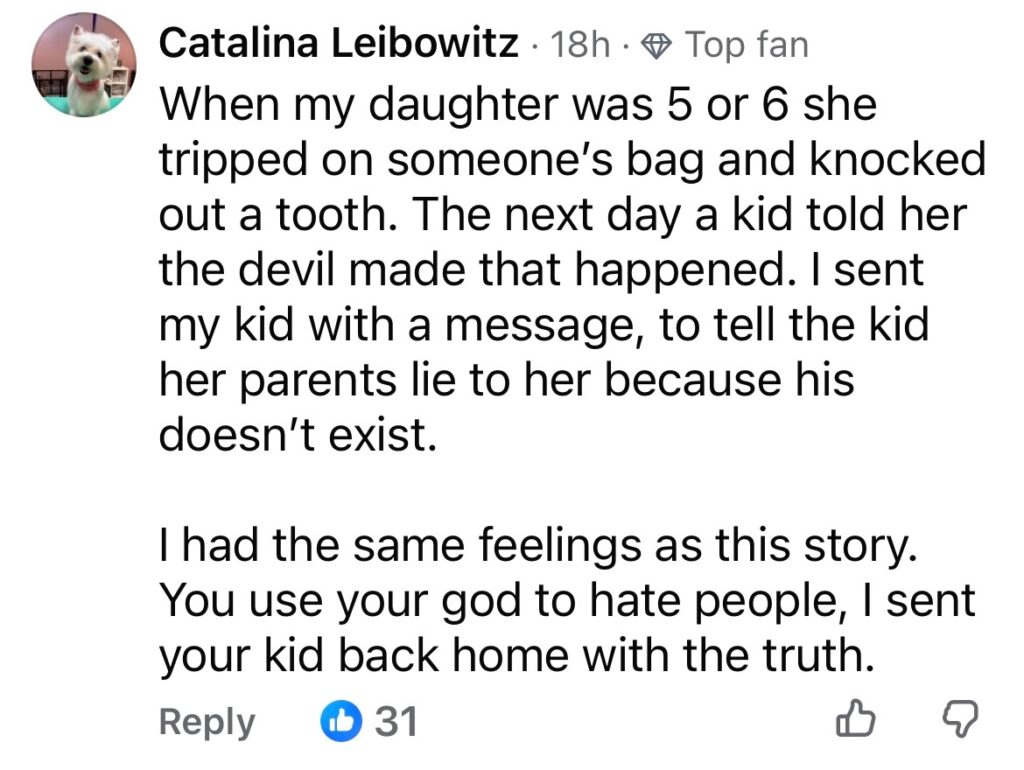
She didn’t blame the child. She blamed the teaching.
“You use your god to hate people,” she wrote. “I sent your kid back home with the truth.”
Her comment wasn’t about cruelty. It was about refusing to let harmful ideas go unchallenged, especially when they hurt children.
Many commenters focused on how faith is often distorted to justify harm.
Jennifer Dyster pointed out that using religion to condemn others directly contradicts its core teachings.
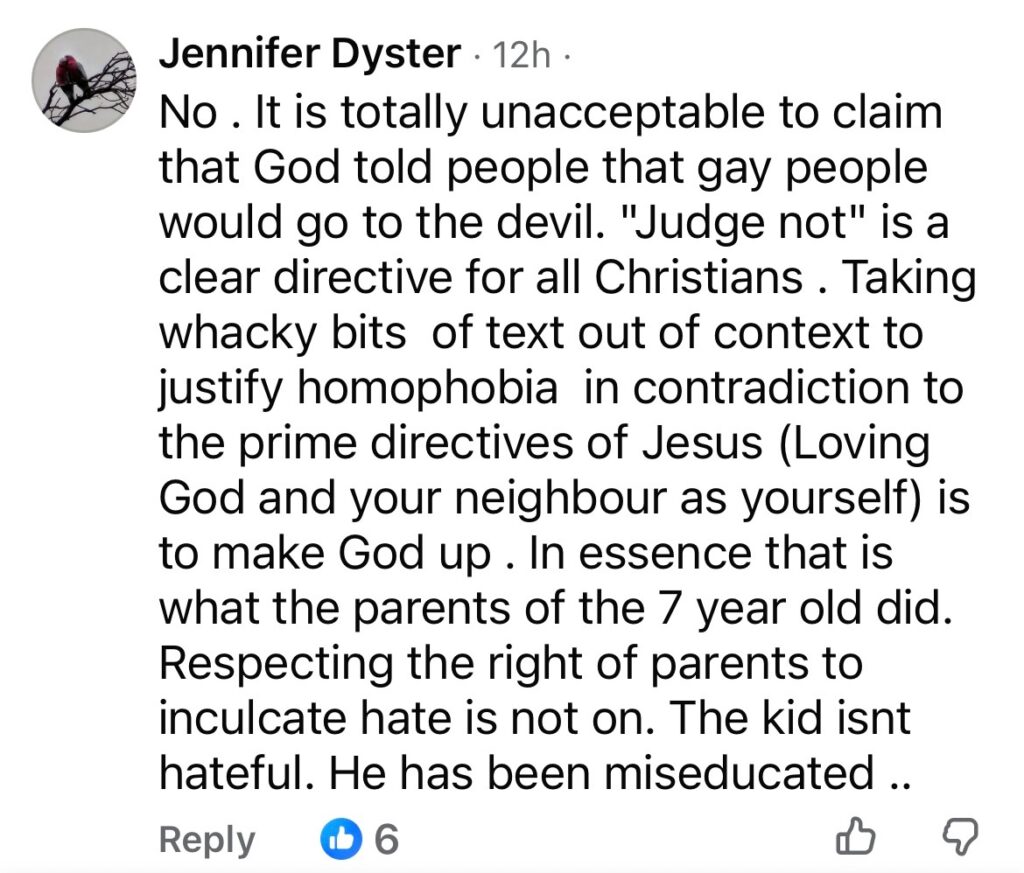
She reminded readers that “judge not” is not ambiguous, and that selectively quoting scripture to support homophobia is a choice, not a commandment.
Importantly, she emphasized something many echoed later:
The child wasn’t hateful. He was mis-educated.
That distinction mattered.
Several people praised the father’s restraint.
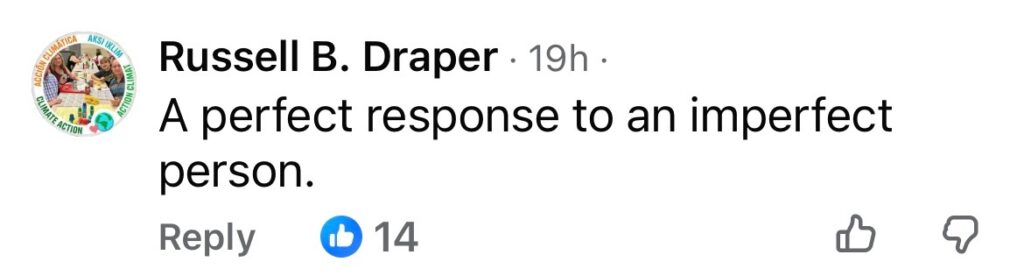
Russell B. Draper summed it up simply:
“A perfect response to an imperfect person.”
Others admitted they would have reacted the same way, or wished they had.
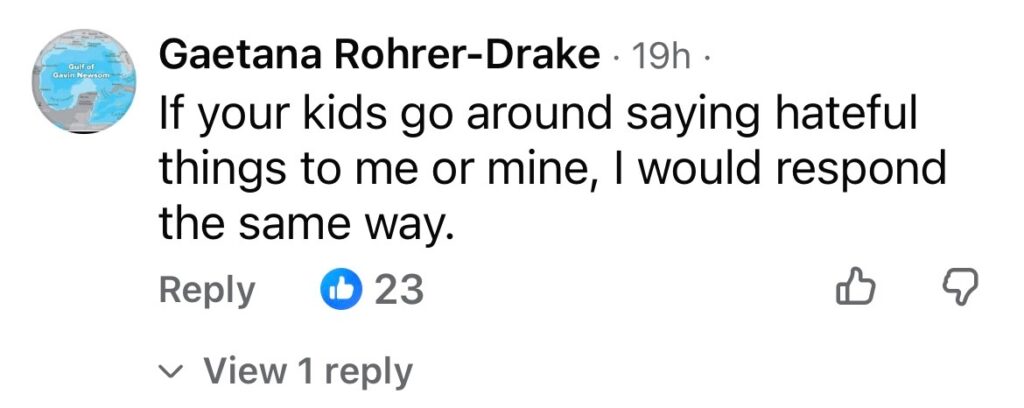
Gaetana Rohrer-Drake said that if someone’s child spoke hatefully to hers, she would respond just as firmly.
Because silence, many argued, is not neutrality. It’s permission.
Still, the comments weren’t naïve about reality.
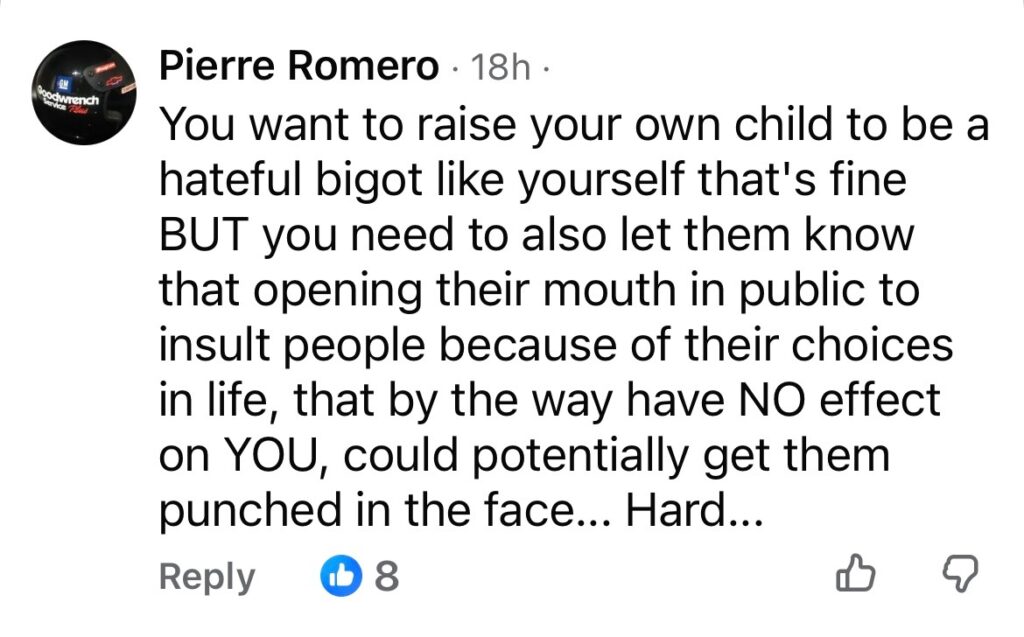
Pierre Romero bluntly pointed out that raising a child to insult others publicly doesn’t come without consequences , especially as they grow older.
The message wasn’t violent. It was cautionary.
Words have weight. And the world responds to them.
This wasn’t just about one dad. Or one kid.
It was about how prejudice survives.
Not through monsters, but through ordinary conversations at dinner tables. Through unchecked repetition. Through adults who mistake belief for immunity.
The father’s response didn’t attack faith.
It didn’t attack a child.
It confronted harm, and drew a boundary.
And for many watching, that boundary felt overdue.
Moments like these remind us that empathy is taught the same way hate is, through modeling.
Children learn how to treat others by watching adults respond when things get uncomfortable.
This father didn’t choose rage.
He chose clarity.
And that choice resonated far beyond the original moment.
If this story made you pause, talk to your kids, not just about what they believe, but why.
Challenge harmful ideas when you hear them. Model kindness loudly enough that it sticks. For more real stories that spark empathy, reflection, and meaningful conversations, visit Simply Wholesome , where humanity always comes first.












Leave a comment